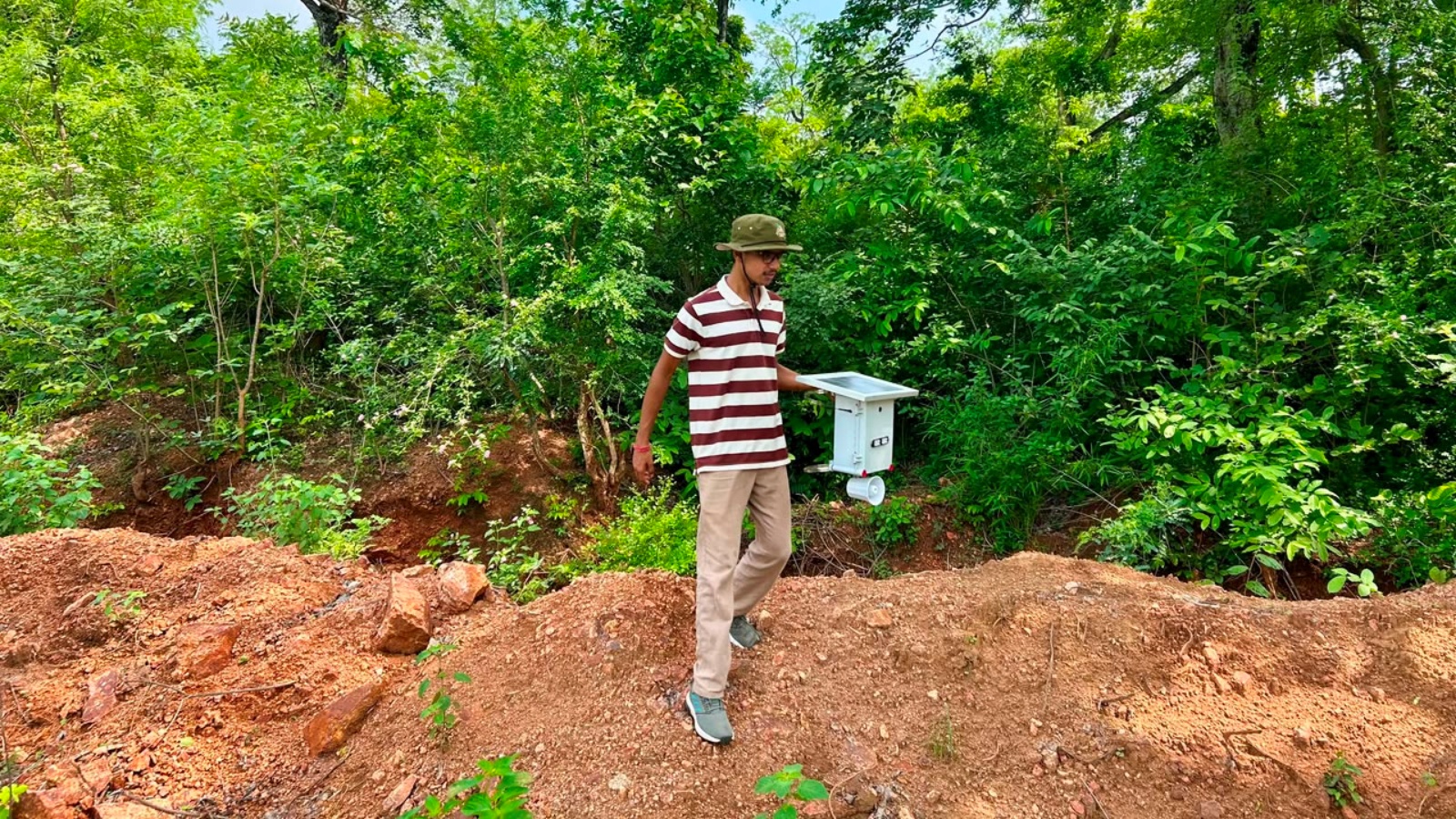
In Jharkhand’s West Singhbhum district, a single elephant killed 20 people over 10 days in January, highlighting the state’s struggle to manage human-elephant conflict. The Forest Department has been looking for better ways to track elephant movement and warn people in vulnerable areas. One person trying to address the problem is 17-year-old Avi Mohan Shukla, who recently completed his class 12 in Ranchi and has taken a gap year to work with officials at the Palamu Tiger Reserve (PTR) on an AI-based elephant early warning and deterrent system called InnoBox.
The idea took shape after Shukla participated in IIM Ranchi’s Young Changemakers programme in 2024, where he visited Rasabeda village and found that crop damage caused by elephants was among the community’s biggest concerns. After interacting with the Adivasi residents of the village, he started looking into the issue of human-elephant conflict. Shukla built his first prototype in 2025 and tested it in Rasabeda, and while the field trials showed promise, they also highlighted the limitations of the device.
Shukla’s device detects the seismic vibrations generated by elephant footsteps and then verifies it using radar before issuing an alert. Powered by solar energy, the device can also be fitted with a camera. Once it detects an elephant, it sounds a siren, captures photographs, records the location and time, and automatically sends alerts to forest officials through a web dashboard. The information can also be sent directly to mobile phones.
Shukla’s work came to the attention of the Forest Department after he showcased the project at various forums. The Principal Chief Conservator of Forests invited him to present the system, following which the department sanctioned Rs 1 lakh for research and development and asked him to build 10 devices for pilot testing. Since June, Shukla has been working at PTR as a ‘temporary tech fellow’, collecting seismic data generated by elephant footsteps and radar signatures reflected from their bodies to train and refine the machine learning model.
Shukla had secured admission to study computer engineering at the University of Hong Kong but decided against enrolling after failing to meet the scholarship requirements. He chose to continue his research, feeling that he already had an opportunity to build something useful in Jharkhand. The prototype is currently being tested using trained elephants at the reserve, and its present detection range of 15-20 metres is being improved.
PTRA Deputy Director Prajesh Jena said that Shukla is a child prodigy with exceptional skills in artificial intelligence and is contributing meaningfully to their work. Jena invited Shukla to join the Tiger Cell, believing that young people working on technology-based conservation solutions should get opportunities early.