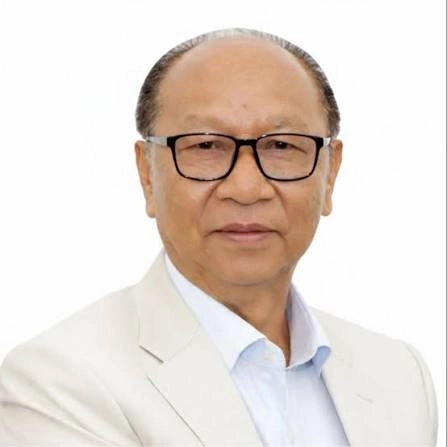
The recent controversy surrounding Dr. S.C. Jamir and his views on the Naga political issue raises a question that goes beyond any individual or organisation: Who has the right to speak about the Naga political question? Jamir has publicly called for an early settlement and sought to present the Naga perspective before the RSS leadership and the Government of India. Whether one agrees with his approach or not, he has every right to express his views.
Dr. Jamir is a Naga and a veteran public figure who has spent decades in public life. He has served as an elected representative, Chief Minister of Nagaland and Governor. These facts do not automatically make his views correct or give him a mandate to speak on behalf of every Naga. But disagreement does not strip him of the right to participate in a public discussion concerning his people and his homeland.
There is an important distinction between the right to speak and the right to speak for everyone. Dr. Jamir may express his views as an individual Naga and as a former public leader. Others are equally entitled to challenge his interpretation of history, question his political positions and present a different understanding of the Naga political issue. That is precisely how a democratic and open political discourse should function. No organisation, political party, underground group, civil society body or individual should be treated as having a monopoly over the Naga voice.
If Dr. Jamir’s arguments are considered wrong, let them be answered with facts, historical records, constitutional arguments and reasoned political debate. If his interpretation of events is disputed, let those disagreements be placed before the public. If his approach is considered inadequate, let an alternative approach be articulated. Silencing a Naga is a different matter altogether. The Naga political question belongs to the people. It is not the private property of any organisation or individual. Its history is complex, its interpretations are contested, and its future concerns generations yet to come. That is why the space for discussion must remain open. We may disagree profoundly on history, politics, agreements, representation and the way forward. Such disagreements are inevitable. What should not become inevitable is the attempt to silence a fellow Naga by questioning his right to speak.