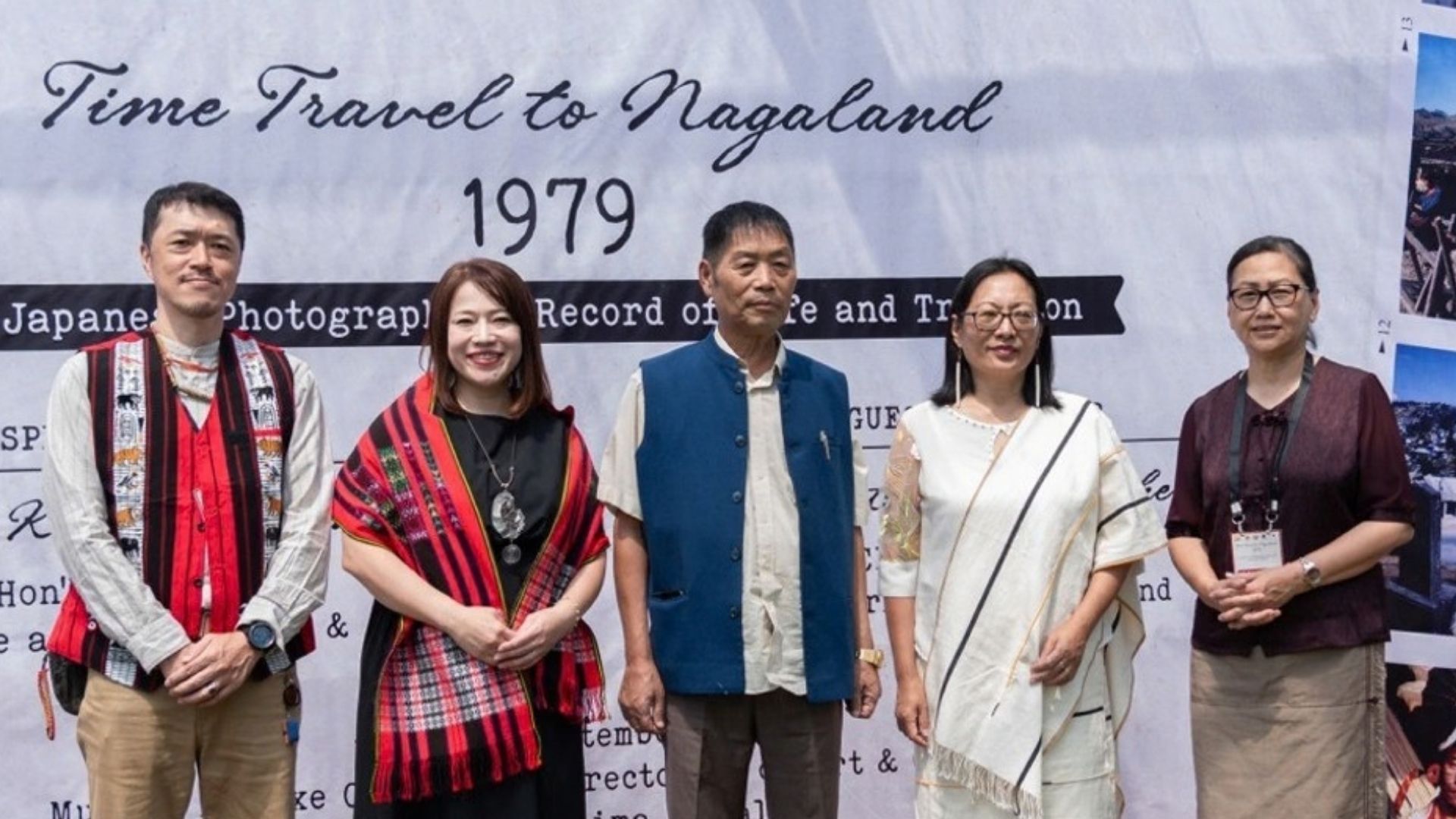
Kohima – On Wednesday a photography exhibition titled “Time Travel to Nagaland, 1979: A Japanese Photographer’s Record of Life and Tradition” opened at the Museum Annexe Courtyard of the Directorate of Art & Culture. The show displays photographs taken by Japanese ethnographic photographer Yuzo Morita during his 1979 travels across the state.
The exhibition was organised jointly with the National Museum of Ethnology (NMoE) in Osaka, Japan. It also marked the launch of the Database of Naga Collection at the NMoE and the Digital Archives of Morita’s photography collection, making the images accessible for research, education and future generations.
K. Konngam Konyak, Advisor for Art & Culture and Treasuries & Accounts, said the photographs document people, traditions, everyday life, landscapes and cultural practices more than forty years ago, serving as records of Nagaland’s cultural memory. Commissioner Bodeno S. Colo welcomed the exhibition as a result of the 2025 Statement of Cooperation between the NMoE and the Nagaland State Museum, highlighting the friendship and scholarly exchange between Japan and Nagaland. Director Adela Moa noted that the initiative followed six months of work, including visits to Osaka, identification of artefacts, and development of the database, and that it aims to connect past and present, strengthen cultural and academic relations and promote preservation of Naga heritage. Associate Professor Emi Okada added that Morita’s photographs, now digitised, will allow visitors to revisit Nagaland’s cultural life in 1979 while recognising traditions that continue to be cherished today.
The programme featured folk performances by Rüsokhrie Krotho of Kohima Village and the Pochury Cultural Troupe. The Database of Naga Collection and Digital Archives were launched by Konyak, followed by the exhibition inauguration. The event was chaired by Assistant Archivist Temjenjungla Aier and concluded with a vote of thanks delivered by Additional Director N. Thungchano Yanthan.