Chakma organisations across India marked 17 August as ‘Chakma Black Day,’ a day of mourning, not celebration, for the 1947 Radcliffe Award that placed the Chittagong Hill Tracts (CHT) inside East Pakistan rather than India. This year’s observance, held at the CADC Art & Culture Hall in Kamalanagar, headquarters of the Chakma Autonomous District Council (CADC) in Mizoram, doubled as a launchpad for a far more assertive political demand: that India formally pursue the ‘return’ of the CHT, including through international legal action and economic pressure on Dhaka.
The event was jointly organised by the Chakma National Council of India (CNCI) Mizoram State Committee, the Central Young Chakma Association, the Central Mizoram Chakma Students’ Union and the Chakma Mahila Samiti. Addressing the gathering, Dg. Nirupam Chakma, Chief Executive Member of the CADC and National President of the CNCI, argued that the case for the CHT’s inclusion in India is not folklore but is documented in the contemporary record. He cited minutes of a 16 August 1947 meeting in New Delhi in which Jawaharlal Nehru is said to have objected to the CHT going to East Bengal, noting that the region was an ‘excluded area’ with no representation in the Bengal Council and a population that was roughly 97 percent Buddhist and Hindu, and to have argued that on religious and cultural grounds the CHT should form part of India.
Speakers recalled that the Indian tricolour was hoisted at Rangamati on 15 August 1947, two days before the Radcliffe Boundary Commission publicly announced that the CHT would go to Pakistan, a sequence they describe as a ‘rupture’ imposed on a non-Muslim-majority population against its own wishes. They also linked the Partition-era grievance to a later one: the construction of the Kaptai Dam in the 1960s, which submerged large tracts of Chakma cultivable land and displaced tens of thousands of people, compounding the original sense of dispossession.
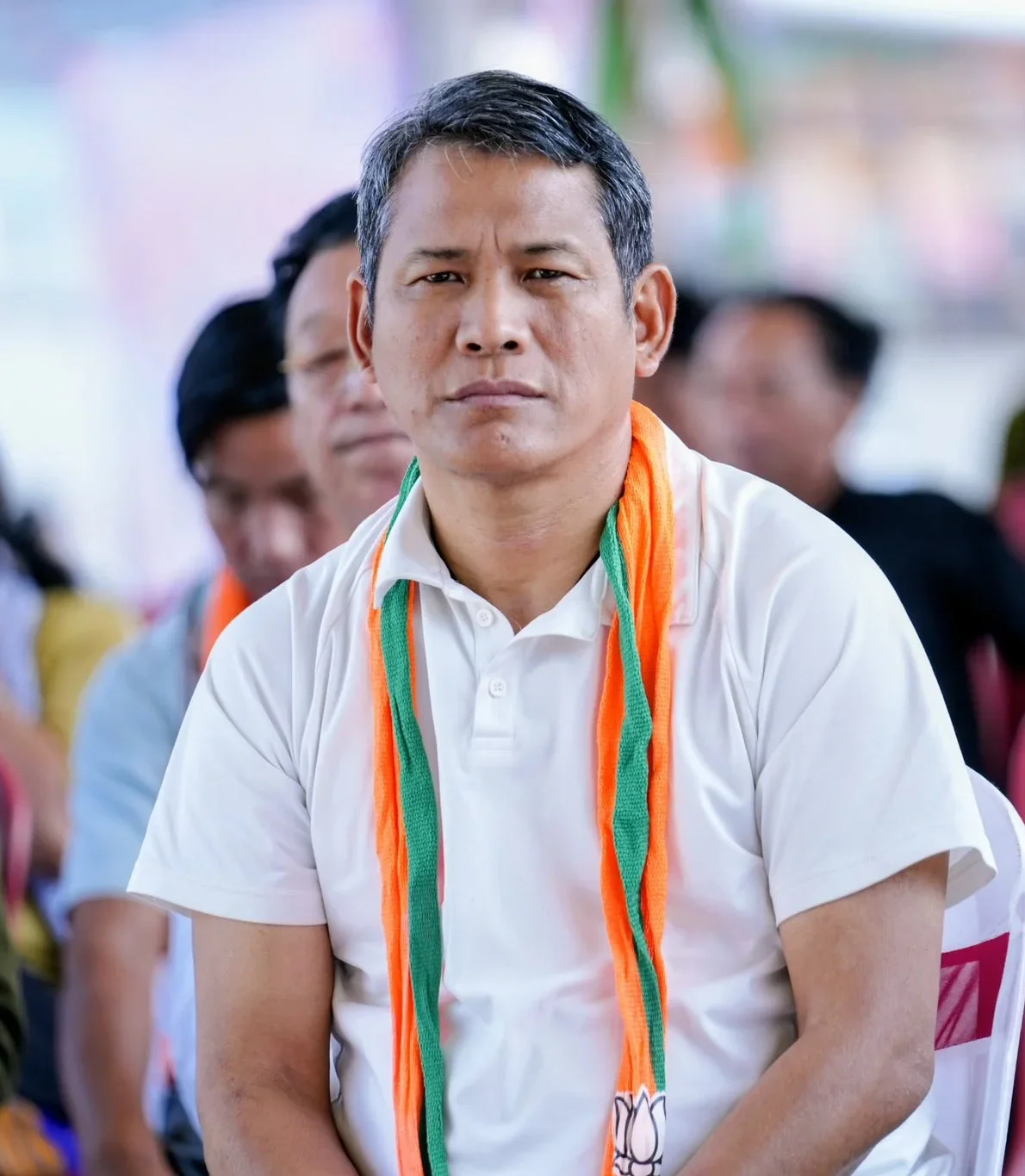
A group of Indian Chakma leaders formally decided to challenge that 1947 award before the International Court of Justice in The Hague, seeking the CHT’s inclusion in India. The initiative was proposed by Rasik Mohan Chakma, MLA and member of the CADC, and endorsed by Prof. Gautam Chakma, President of the Humanity Protection Forum, Pritimoy Chakma of the Chakma Hajong Elders Forum in Arunachal Pradesh, and Suhas Chakma, founder of the Chakma Development Foundation of India. Their legal argument rests on a specific reading of the partition documents rather than only on political memory.
The group points out that the Indian Independence Act of 1947 did not itself settle the status of the CHT, a district that had been administered separately since 1860. The Act’s First Schedule listed the districts assigned to East Pakistan by name without including the CHT among them. On that basis, the group argues the CHT’s transfer to Pakistan was carried out by the Radcliffe-led Bengal Boundary Commission rather than by the Act itself, at a time when non-Muslims made up close to 98.5 per cent of the district’s population, and its indigenous peoples were given no hearing.
Suhas Chakma summarised the position by saying these were violations that ‘ought to be adjudicated by the International Court of Justice,’ and added that while India has a strong case to bring before the ICJ, other states also bear responsibility for addressing the CHT indigenous peoples’ right to self-determination. The group additionally agreed to raise CHT human rights violations before the international community, including India’s own government.