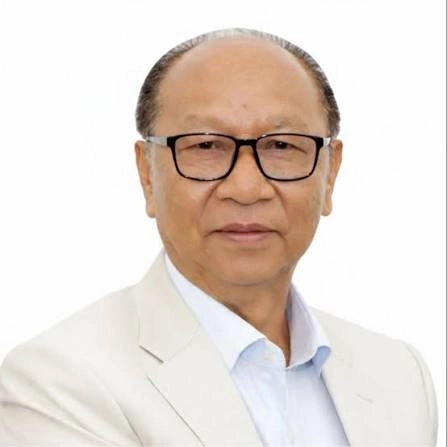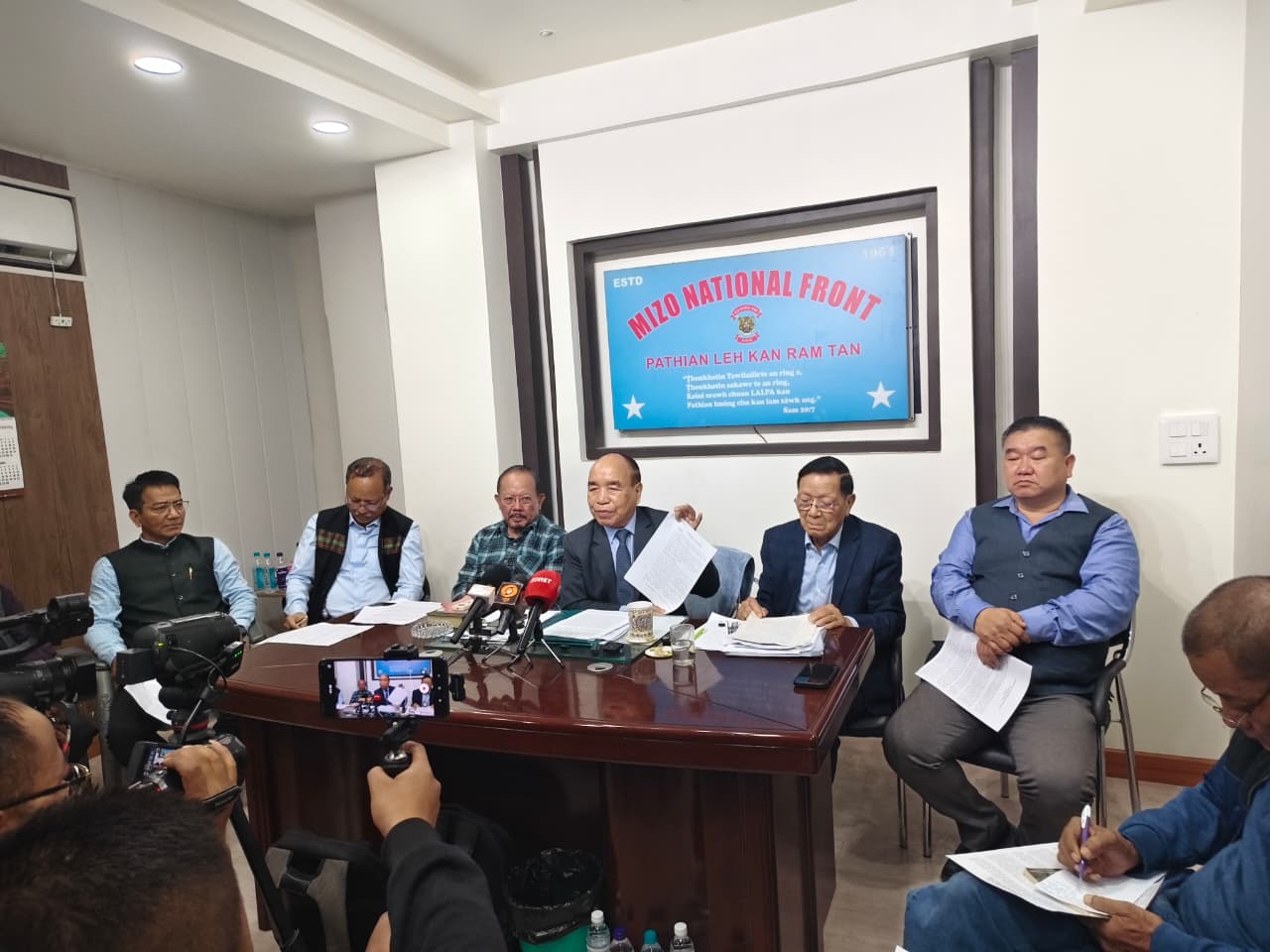
Mizo National Front (MNF) president Zoramthanga has demanded that Chief Minister Lalduhoma apologise to the people of Mizoram and withdraw his remarks on the Inner Line Permit (ILP) and the 1986 Mizoram Peace Accord, alleging that the Chief Minister had distorted historical facts and undermined the state’s constitutional safeguards. Speaking to mediapersons, Zoramthanga stated that Lalduhoma’s address to students at Government Mizoram Law College on July 31 contained statements concerning Mizoram’s constitutional safeguards and the identity of the Mizo people that were factually incorrect and had the potential to mislead the younger generation. He claimed that Lalduhoma had stated that the ILP could be removed if the Central Government so desired and had described the Mizoram Peace Accord as an agreement between the Union Home Ministry and the MNF.
Zoramthanga maintained that the Bengal Eastern Frontier Regulation (BEFR), 1873, under which the ILP is implemented, has served as an important safeguard protecting the Mizo people from demographic and cultural erosion since the colonial period. He further said the ILP received stronger legal protection through the 1986 Memorandum of Settlement (MoS), which provides that the regulation cannot be amended or repealed without the consent of the Government of Mizoram. Zoramthanga argued that Lalduhoma’s repeated assertion that the Centre could abolish the ILP amounts to a ‘message of surrender’, adding that such remarks created the impression that the state government would not oppose any such move.
The former Chief Minister also accused Lalduhoma of inaccurately referring to the 1986 agreement during his address and omitting the name of former Chief Secretary Lalkhama, who signed the agreement on behalf of the Government of Mizoram. Zoramthanga said such factual errors were unacceptable, particularly from someone who has often projected himself as having played a significant role in the peace process. Rejecting Lalduhoma’s description of the accord as merely an agreement between the Home Ministry and the MNF, Zoramthanga said the settlement was signed on behalf of the Government of India by then Union Home Secretary R.D.
Pradhan, on behalf of the Government of Mizoram by then Chief Secretary Lalkhama with the approval of the then Chief Minister Lal Thanhawla, and on behalf of the MNF by its president Laldenga following sustained appeals from churches, civil society organisations and political parties. He added that the agreement was subsequently implemented through the 53rd Constitutional Amendment Act, 1986, which inserted Article 371G into the Constitution, providing constitutional protection to Mizoram’s special provisions. Zoramthanga also questioned Lalduhoma’s changing positions on the Peace Accord over the years.
He alleged that Lalduhoma had earlier criticised the accord while serving as president of the Mizo National Union (MNU), describing it as an unsatisfactory settlement, but later claimed during his tenure as president of the Zoram Nationalist Party (ZNP) that he had been closely involved in drafting it. According to Zoramthanga, the Chief Minister was now attempting to downplay the significance of the accord by portraying it as an agreement only between the Home Ministry and the MNF. Zoramthanga demanded that Lalduhoma publicly apologise to the people of Mizoram and withdraw his remarks before August 15, 2026.
He warned that if the Chief Minister failed to do so, the MNF would initiate further action. The controversy stems from Lalduhoma’s address at Government Mizoram Law College on July 31, where he said that although the ILP is an important safeguard for Mizoram, it could be repealed if the Central Government chose to do so. He also remarked that what is commonly referred to as the Mizoram Peace Accord was formally an agreement involving the Government of India and the MNF, comments that have since drawn criticism from the opposition.