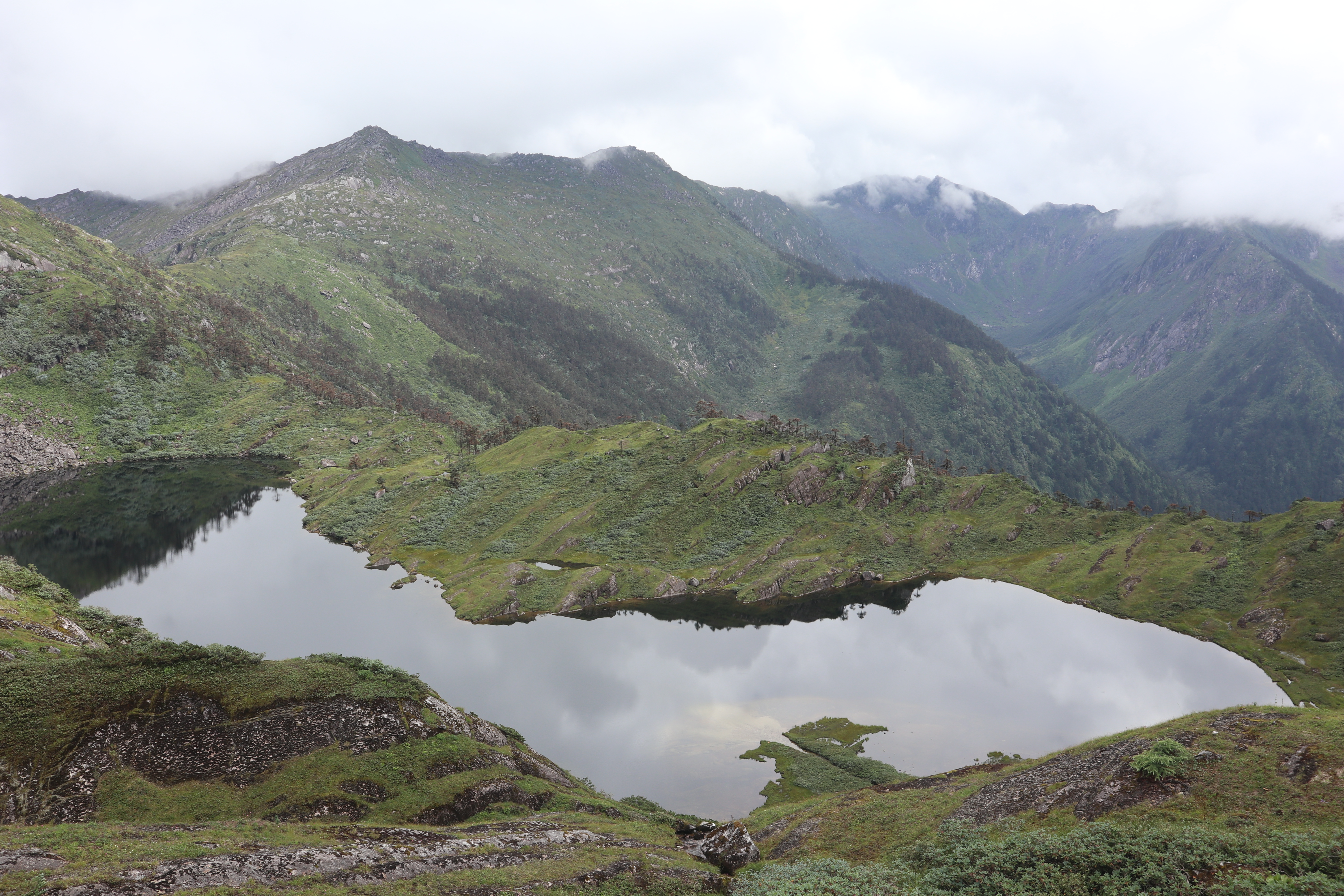
A new international study has shed light on the history of a colossal glacier that once flowed through Arunachal Pradesh’s Dibang Valley, offering fresh insights into how climate change has shaped the region’s mountains. The research, published in the journal Quaternary Science Reviews, reveals that an ancient glacier stretched nearly 100 kilometres through the Dri Valley, drained by the Dri River, a major tributary of the Dibang River, in present-day Arunachal Pradesh. The glacier descended to elevations of 1,300-1,500 metres, among the lowest glacier limits documented anywhere in High Mountain Asia.
Today, the Dri Valley lies near Anini, an emerging offbeat tourism destination in the Mishmi Hills known for its spectacular mountain landscapes and waterfalls. The study was led by Shashank Nitundil of the University of Manchester, along with Christopher M. Darvill, Abi Stone, David Fink, Philip D.
Hughes, Matt D. Tomkins and Krista Simon. The study fills a major gap in Himalayan climate research by providing the first directly dated glacial chronology from the southern slopes of the eastern Himalayas east of Mount Everest.
To reconstruct the glacier’s history, the researchers analysed 63 rock samples using cosmogenic beryllium-10 exposure dating, a technique that determines how long rocks have remained exposed after glaciers retreated. The findings show that the Dri palaeo-glacier reached its maximum extent more than 44,800 years ago, and possibly as early as 58,500 years ago. By around 19,600 years ago, the glacier had already retreated substantially, and by 12,600 years ago it had withdrawn to the upper valleys.
The study provides new insights into glacier behaviour in one of India’s wettest mountain regions, suggesting that glacier evolution was primarily controlled by temperature through its interaction with precipitation and the region’s rugged topography. According to the authors, the findings demonstrate a ‘threshold-like response’, in which relatively small increases in temperature fundamentally altered glacier behaviour, making the monsoon-fed glaciers of the eastern Himalayas particularly sensitive to warming. The Dibang Valley, located in Arunachal Pradesh’s Mishmi Hills, receives nearly 2,800 mm of annual rainfall, with almost 90 per cent falling during the Indian Summer Monsoon.
The basin currently contains around 219 glaciers covering roughly 200 sq km, making it an ideal natural laboratory for studying how monsoon-fed glaciers respond to climatic shifts. Beyond reconstructing the region’s Ice Age history, the researchers say the new chronology provides an important benchmark for understanding the future of Himalayan glaciers, which sustain rivers supplying freshwater to billions of people across South and Southeast Asia. The study also bridges a long-standing geographical gap in Himalayan palaeoglaciology and provides critical evidence for predicting how monsoon-dominated glaciers may respond to continued global warming.
Recent observations cited in the study show that glaciers around Namche Barwa in the far eastern Himalayas are now among the fastest-thinning in High Mountain Asia, underscoring the urgency of understanding how these glaciers responded to past climate change.