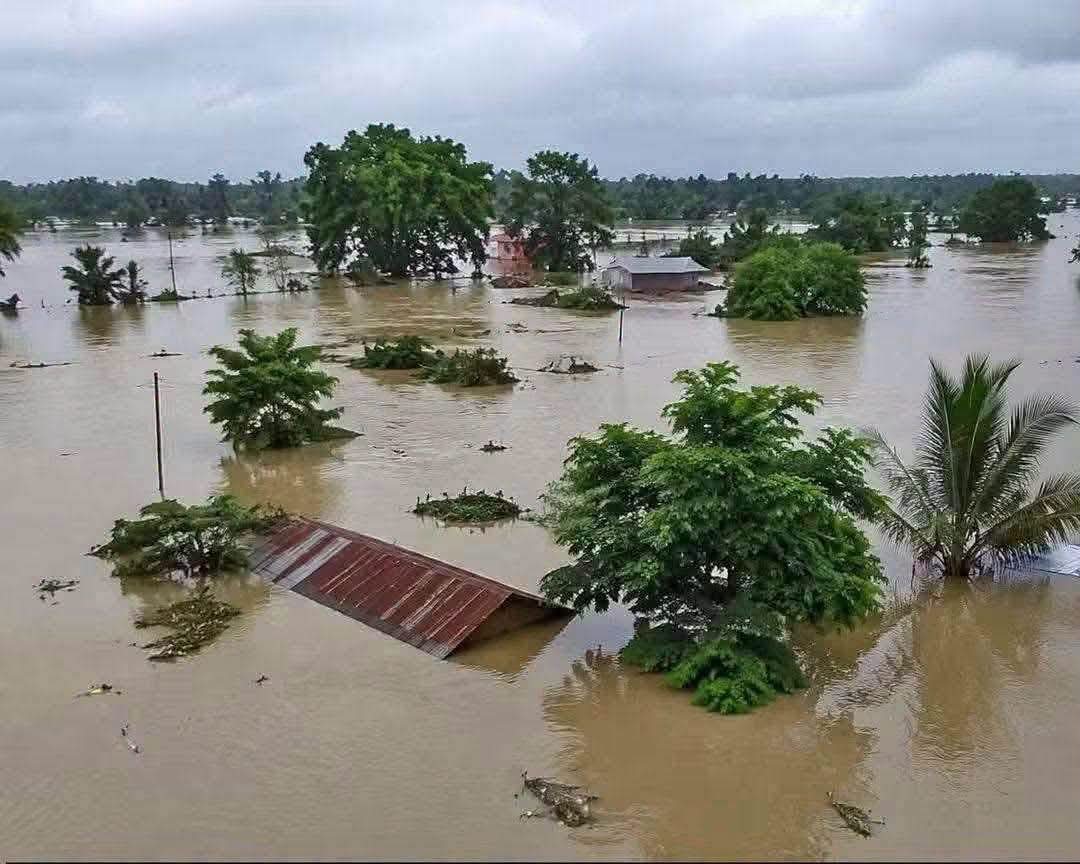
A recent hydrological assessment has confirmed that the devastating flash floods in Upper Assam were primarily triggered by extreme rainfall over Nagaland’s hill catchments. The report, which analyzed rainfall between July 18 and 20, found that Nagaland received 85 mm of rain, exceeding the normal amount by 181%. This led to massive runoff into river systems flowing into Assam, causing widespread damage to homes, agriculture, roads, and other infrastructure in districts such as Sivasagar, Jorhat, and Charaideo.
The worst-hit districts in Nagaland, including Mokokchung, Zunheboto, and Kiphire, recorded exceptionally heavy rainfall, with Mokokchung receiving 238.9 mm of rainfall, 493% above normal. The report notes that the same weather system triggered multiple landslides and flash floods across Nagaland, particularly in Mon district.
Upper Assam also witnessed heavy rainfall during the period, with Charaideo receiving 170 mm, Golaghat 147.9 mm, Jorhat 105.2 mm, and Sivasagar 93.2 mm. However, the report concludes that local rainfall alone cannot explain the scale of the flooding, attributing the disaster to an extreme hydrometeorological event over Nagaland’s upper catchments.
Assam Chief Minister Himanta Biswa Sarma has echoed the report’s findings, stating that the catastrophe warrants a deeper scientific investigation. The government plans to examine satellite imagery to determine exactly what transpired in the upper catchments and whether similar events could recur. A comprehensive study will be undertaken after the floodwaters recede, focusing on satellite imagery of Mon district.
The proposed study aims to help Assam develop long-term flood mitigation and disaster preparedness measures for downstream districts vulnerable to sudden surges in rivers originating in Nagaland during extreme weather events. The state government is currently responding to the crisis with a whole-of-government approach, with all agencies working round the clock to carry out rescue and evacuation operations.
The government has set up over 148 relief camps, providing shelter to close to 30,000 people, and is delivering food, drinking water, and other essential supplies to affected families. A comprehensive long-term rehabilitation package is being prepared for every affected family, with the government working closely with various departments and the Government of India.
The Chief Minister has visited flood-hit areas, reviewing rescue and relief operations, and assuring affected families that the government will ensure the timely supply of all essential assistance. The Union Home Minister has also spoken to the Chief Minister, informing him that an inter-ministerial central team will soon visit the state to carry out a comprehensive assessment of flood-related damage and evaluate the assistance required from the Centre for relief, rehabilitation, and reconstruction efforts.