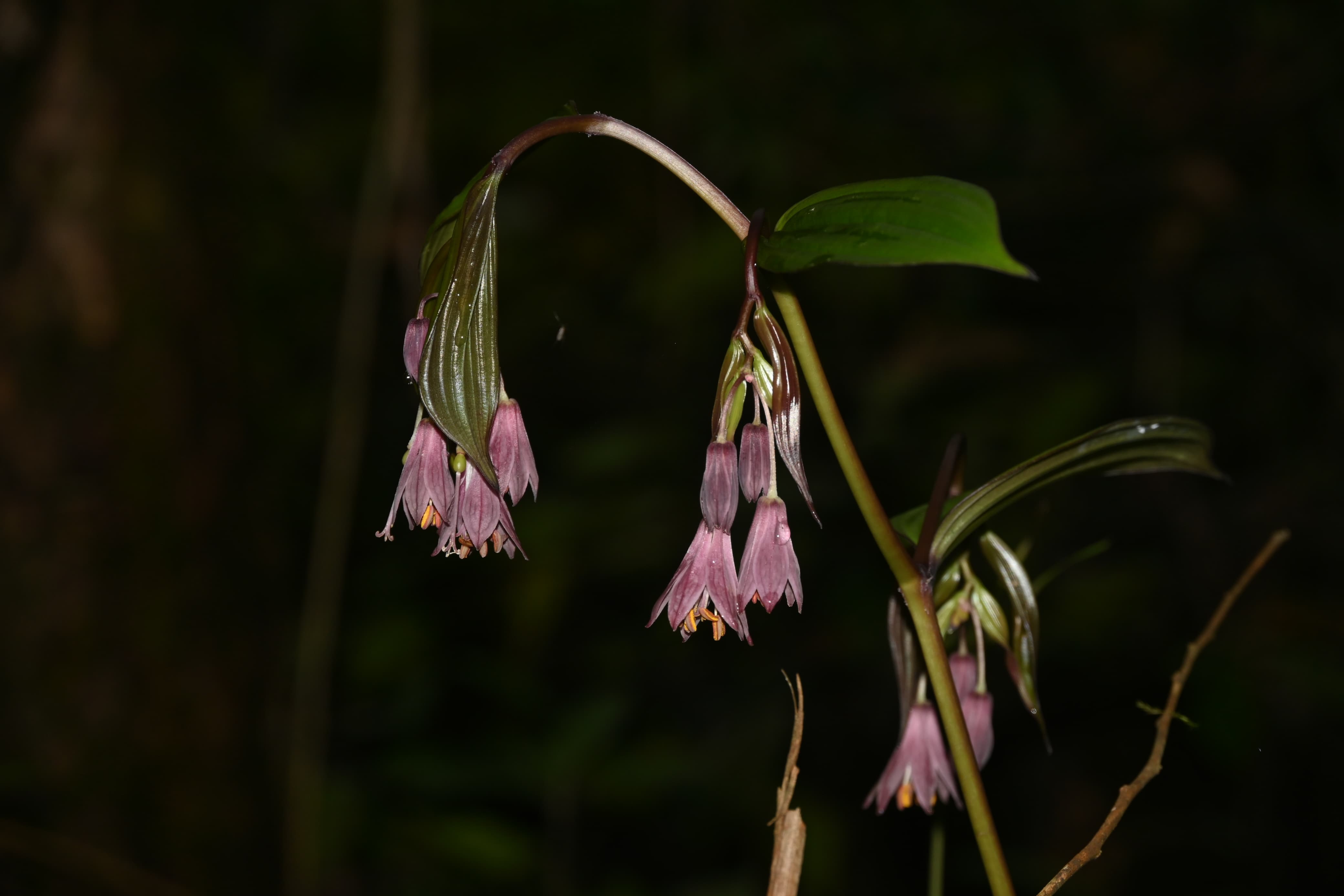
A team of botanists from the Botanical Survey of India has discovered a new species of flowering plant in the forests of Vijaynagar in Arunachal Pradesh’s Changlang district, bordering Myanmar. The plant, named Disporum yobinorum, has been formally described in the latest issue of the international journal Phytotaxa. It is found nowhere else on Earth and has been named after the indigenous Yobin tribe that inhabits the region.
The discovery was made by researchers Vinay Kumar Sahani and Krishna Chowlu of the Botanical Survey of India’s Arunachal Pradesh Regional Centre, Itanagar. Fewer than 40 individual plants have been recorded so far, prompting researchers to recommend that the species be treated as Data Deficient under IUCN criteria until further surveys are conducted.
The find adds to the growing list of unique plants emerging from Vijaynagar, one of India’s least disturbed forest landscapes. The region shares its geography and flora with the forests of Yunnan in China and Myanmar’s Kachin State, making it part of a biologically rich transboundary landscape. Researchers say the discovery is another reminder that Arunachal Pradesh’s remote frontier forests continue to harbour species unknown to science and require careful conservation as development activities expand.
The Yobin community, also known as the Lisu in Myanmar and China, are one of Arunachal Pradesh’s smallest indigenous tribes. They have long been known for their intimate knowledge of the forests and mountains of the Eastern Himalaya. The researchers acknowledged the assistance of the local Gorkha community and the Arunachal Pradesh Forest Department in facilitating the fieldwork.
The plant grows in moist, shaded evergreen forests at elevations of 1,100-1,500 metres, alongside streams in habitats rich in native vegetation. Scientists say the discovery underscores the conservation significance of Vijaynagar, where the combination of rugged terrain, limited disturbance, and its location within the Eastern Himalayan biodiversity hotspot has enabled many rare, endemic and previously undocumented species to survive.
The researchers emphasized that future infrastructure development and land-use changes in the region should be planned carefully to ensure that this exceptional botanical heritage is not compromised, as the forests form part of a larger ecological continuum stretching across northeastern India, northern Myanmar and southwestern China.