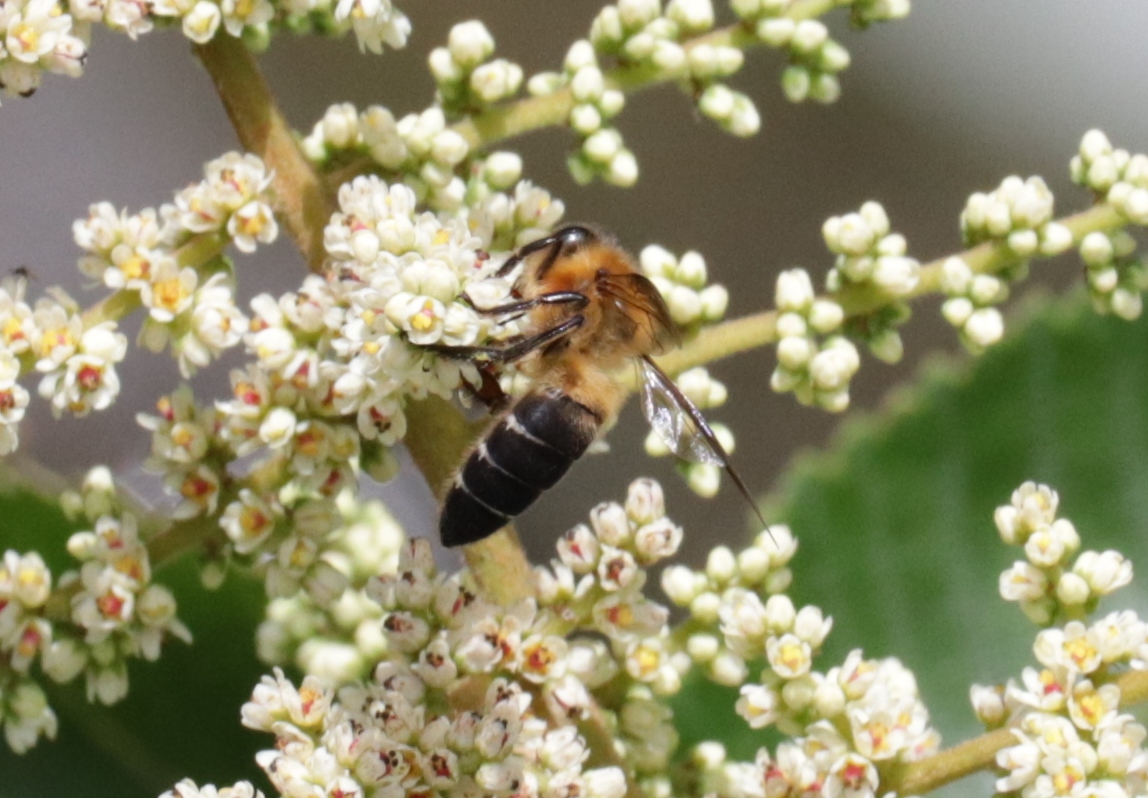
Scientists have made a groundbreaking discovery in Arunachal Pradesh, unlocking one of the biggest gaps in the natural history of the world’s largest honey bee, Apis laboriosa. The giant bee, famous for producing the prized and sometimes intoxicating ‘mad honey’ of the Himalayas, has been found to depend on 87 plant species for its survival. This comprehensive picture of the bee’s forage plants in the eastern Himalayas is expected to strengthen conservation efforts and provide clues for developing high-value Himalayan honey.
A new study published in the Journal of Apicultural Research identified the plant species that provide nectar and pollen to Apis laboriosa, offering a vital insight into the bee’s natural history. The research was carried out by a team of scientists from Rajiv Gandhi University and the University of Calcutta, who analyzed honey samples and conducted field observations around nesting sites in remote locations in West Kameng, Dibang Valley, and Anjaw districts.
The study revealed a remarkably diverse diet, with the bee relying on a wide range of flowering plants throughout the year. The researchers documented 87 plant species belonging to 58 families, including 70 nectar-producing species. Among the most intriguing findings was evidence linking the bee to Rhododendron and other members of the Ericaceae family, which contain grayanotoxins that give rise to the legendary Himalayan ‘mad honey’.
The research highlights the bee’s contribution to pollinating economically important plants, including fruit trees such as peach and pear. The scientists found that the main honey flow season stretches from February to September, when flowering is abundant across the mountains. During the colder months, colonies depend on stored honey. The study also found that most honey samples were multifloral, reflecting the bee’s varied diet, but one sample was unifloral, dominated by a single flowering species.
The researchers believe that mapping the floral resources used by Apis laboriosa provides an important baseline for conserving Himalayan pollinators at a time when mountain ecosystems are facing increasing pressure from climate change and habitat degradation. The study could also help identify landscapes that deserve priority protection and support sustainable harvesting of wild honey by local communities.
The authors note that several of the forage plants documented in the study had never before been reported as food sources for Apis laboriosa, significantly expanding scientific knowledge of the species’ ecology. The study offers a reminder that every spoonful of wild honey carries a record of an intricate ecological partnership, one that scientists are only now beginning to fully understand.