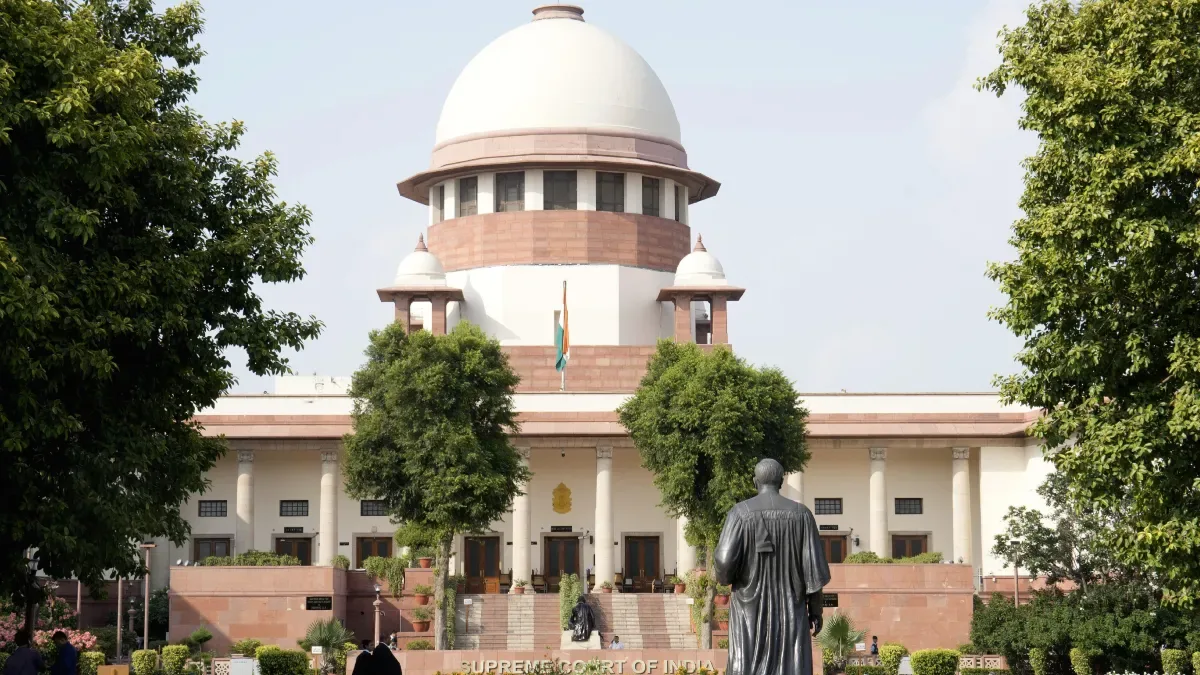
The Supreme Court on August 31 dismissed a public interest litigation that sought a directive for mandatory, uniform labelling of ethanol content at every fuel dispensing nozzle. A bench comprising Justices M.M. Sundresh and P.B. Varale held that the petition could not be entertained under Article 32 and advised the petitioner, Narendra Kumar Goswami, to approach the appropriate high court for relief.
Attorney General R. Venkataramani, appearing for the Centre, characterised the case as proxy litigation, noting that a similar petition had already been rejected. He added that the petitioner was attempting to hold the government personally answerable. Goswami, who produced a petrol‑pump receipt in court, argued that consumers have a right to know the exact composition of the petrol they purchase and pointed out that the receipt did not mention the ethanol percentage.
Beyond labelling, Goswami requested that every fuel invoice explicitly state the ethanol percentage and that the Centre publish a searchable, vehicle‑wise compatibility database indicating which ethanol blends are suitable for each make, model, engine type and year. He also called for the formation of an independent expert committee comprising representatives from the ministries of petroleum and natural gas, road transport and highways, the Bureau of Indian Standards and independent automobile engineers to assess real‑world compatibility of E20 across the existing fleet and to report on fuel efficiency, engine longevity, maintenance costs, warranty, environmental impact and food‑security concerns.
The plea further sought a national consumer disclosure protocol for ethanol‑blended petrol, to be drafted in consultation with the Central Consumer Protection Authority and the Bureau of Indian Standards. It asked authorities to submit all policy documents, technical studies, safety standards and records of public consultation that support the compulsory rollout of E20, and to devise a transparent transition framework for legacy and non‑compatible vehicles, including the provision of lower‑ethanol petrol where technically and economically feasible.