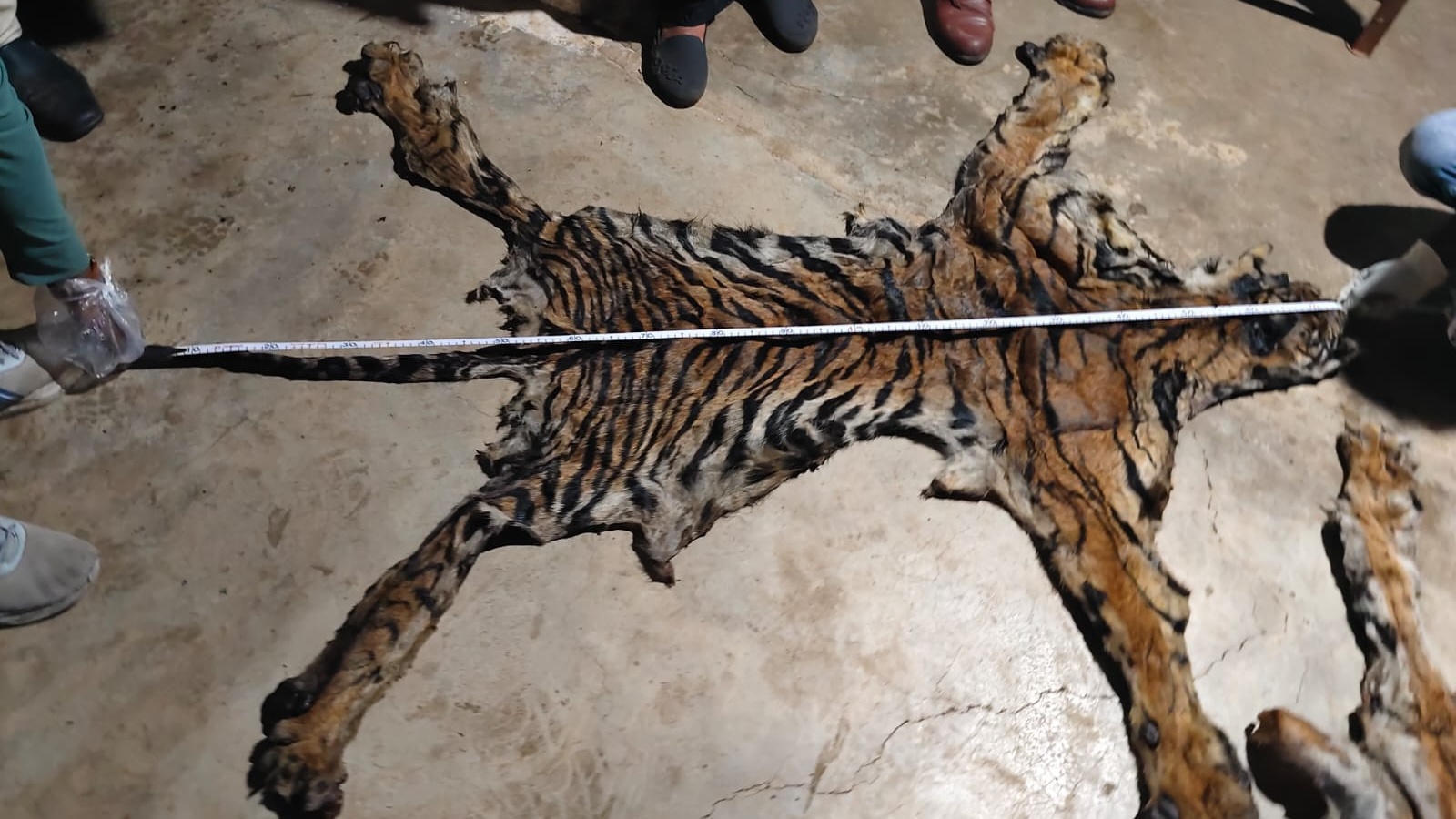
A probe into the seizure of three tiger skins in a week has raised alarm bells in Chhattisgarh, with investigators linking two police personnel to the poachers. The development has sparked concerns that multiple tigers may have been killed in and around the Indravati Tiger Reserve. Three forest personnel posted in the reserve have been suspended for alleged negligence.
The suspensions came after a third tiger skin was recovered on July 5, days after two tiger skins were seized from alleged poachers on June 29. Forest officials are investigating whether the skins belong to tigers from the Indravati Tiger Reserve. According to the latest All India Tiger Estimation in 2022, the reserve had six tigers. A fresh tiger census is underway this year, after which updated numbers will be released.
The arrests have also revived concerns over poaching in the reserve. In May last year, a tiger was rescued after its leg was caught in a steel leg-hold trap laid by poachers. The animal was later shifted to the Jungle Safari in Raipur, where it recovered. The investigation began on June 29 when two Maharashtra Police personnel, Baburao Madavi and Bijeshwar Gedam, were arrested with two tiger skins.
During questioning, five more accused were arrested, leading investigators to the recovery of a third tiger skin. The operation was carried out on intelligence provided by the Wildlife Justice Commission and involved multiple agencies, including the Anti-Poaching Unit of the Udanti Sitanadi Tiger Reserve and the Wildlife Crime Control Bureau.
Officials said the two policemen were intercepted near the Maharashtra-Chhattisgarh border while allegedly transporting two tiger skins on a motorcycle. A wildlife offence was registered by the West Paralkot Range of the West Bhanupratappur Forest Division in Kanker district. The operation forms part of intensified efforts to protect the nearly 400-km wildlife corridor linking the forests of Gadchiroli, Indravati Tiger Reserve, Abujhmad, Udanti Sitanadi Tiger Reserve and Odisha’s Sunabeda Wildlife Sanctuary.
The corridor is considered one of central India’s most important wildlife dispersal routes. Besides facilitating the movement of tigers from Maharashtra into Chhattisgarh, it is critical for maintaining genetic connectivity among species such as elephants, gaur and wild buffalo.