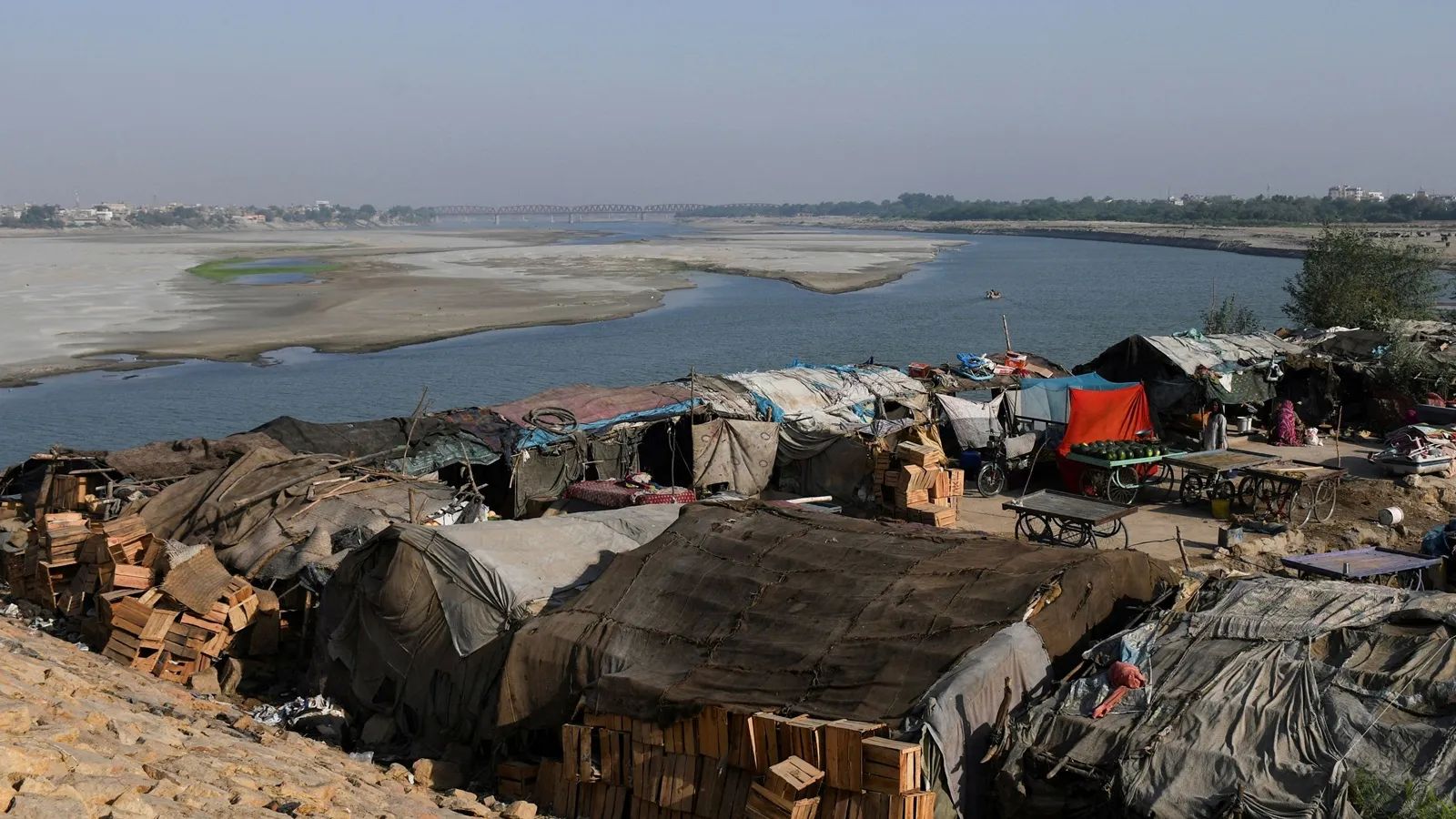
A recent study has revealed a significant decline in rainfall in the eastern river basins of the Indus river system, with a 20% decrease in precipitation observed in the catchment areas of the Ravi, Beas, and Sutlej rivers between 1951 and 2024. In contrast, rainfall in the catchment areas of the western rivers, including the Indus, Jhelum, and Chenab, remained relatively stable, with only a 6% reduction over the same period, which is statistically non-significant.
The study’s findings are relevant in the context of India’s argument that the Indus Waters Treaty with Pakistan needs to be renegotiated to account for new ground realities created by climate change and demographic changes. Under the treaty, the waters of the three eastern rivers have been fully allocated to India, while those of the three western rivers are mostly meant for use by Pakistan. India has repeatedly maintained that the treaty would remain in abeyance until Pakistan credibly and irrevocably abjures its support for cross-border terrorism.
The study, carried out by researchers at IIT-Gandhinagar, is the first data-based evidence to support the argument that water availability and flow in the rivers have been substantially altered over the decades due to climate change. The study found significant depletion of groundwater in the Sutlej and Ravi sub-basins, with the groundwater situation in the Chenab, Jhelum, and Indus basins being relatively better. A pronounced decline in annual inflow of water in the reservoirs of major dams on the eastern rivers was also observed.
According to the study’s lead author, Vimal Mishra, most of these changes are due to natural causes, but they do alter the situation that existed in 1960 when the Indus Waters Treaty was signed. The study suggests that these large-scale changes may make the treaty unsustainable in the long run, as it was designed in the mid-20th century amid hydro-climatic conditions that differ remarkably from the recent period.
The study’s findings are significant, as they provide evidence to support India’s argument that the treaty needs to be renegotiated. The study’s results are due to be published in a peer-reviewed international journal.