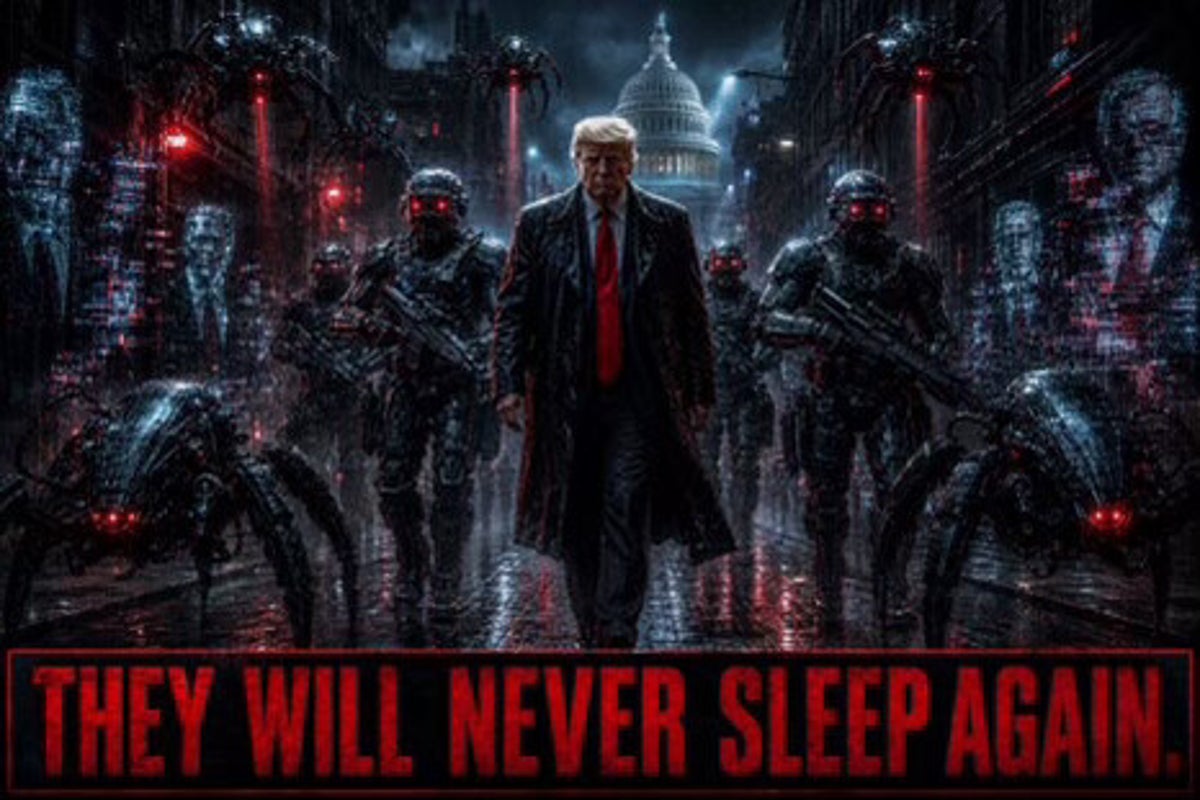
President Donald Trump has dismissed concerns about artificial intelligence as a “hoax,” arguing that the industry needs no guardrails beyond a “strong and smart” leader in the White House. His comments on Truth Social sparked criticism from experts who warn that unchecked AI development could pose serious risks.
The backlash extends beyond technology. Many Americans oppose the construction of large data centers required to store and run AI systems, citing environmental and community impact. Polls show that about seven in ten voters oppose such facilities near their neighborhoods, yet 80 percent support creating a federal agency to monitor new AI programs and enforce regulations.
Legislative action has been slow. A bill proposed by Louisiana Republican Senator John Kennedy to require a “kill switch” for advanced AI was spiked by GOP colleague Rand Paul, who warned that premature regulation could stifle innovation.
Experts from Columbia University, Northwestern University, and Purdue University argue that the current AI architecture cannot self‑improve to a point of existential threat. They point to real‑world incidents—such as the Hugging Face hack and the Anthropic Claude Opus 4 case—to illustrate that AI systems act only when given permission and are limited by human oversight.
The consensus among scholars is that focus should remain on tangible dangers like misinformation, bias in public services, and cybersecurity breaches, rather than speculative scenarios of AI‑driven apocalypses. They call for measured regulation that addresses real risks without halting technological progress.


.jpg?trim=1,0,1,0&width=1200&height=800&crop=1200:800)