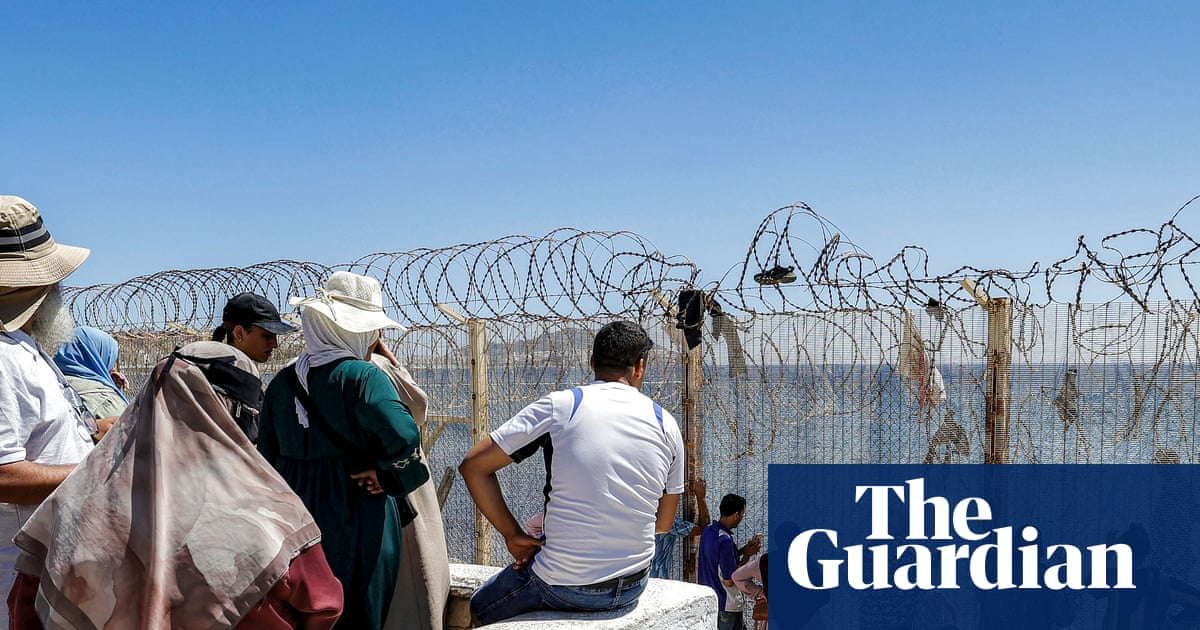
Hundreds of people have gathered in the northern Moroccan town of Fnideq, near the border with Spain’s Ceuta, flashing photos of their missing loved ones to passersby in the hope of tracking them down. The town was the site of extraordinary scenes last week as about 72,000 people made their way into Ceuta, a tiny Spanish territory in north Africa.
At least 88 people have died in Ceuta, according to local officials, and another 11 in Morocco, while dozens of others remain missing. Many families are searching for their sons and daughters, and concerns over the fate of unaccompanied children in Ceuta are growing. Spanish police have set up an office in Ceuta to gather reports of missing people.
The mass crossing into Ceuta has raised questions about what led to the sudden influx. Morocco has faced mounting accusations over the role it may have played. However, a senior Moroccan official rejected the insinuation, saying it was simplistic to say that Morocco should have used force to stop the migrants. The official added that the Moroccan law enforcement forces could no longer confront the migrants due to the large numbers and the strong pull effect.
Spanish intelligence sources have suggested that the influx could be traced to a hoax that had swiftly spread across social media after a Spanish supreme court ruling that migrants arriving by sea could not be summarily deported. The Moroccan official said Rabat had sought to warn Madrid about the repercussions of the ruling, but the claim was rejected by Spain’s migration minister.
The uncertainty surrounding the mass crossing has left many families searching for their loved ones. Hadijja, who had been waiting at the border since Saturday, said she had not had any news of her 23-year-old son and was worried about his safety. Fatima, who had been waiting at the border with her family, said her brother had crossed into Ceuta days earlier and had borrowed a phone to call her, saying he would return soon.
The situation in Ceuta remains difficult, with many families searching for their loved ones and concerns over the fate of unaccompanied children growing. The Spanish government has estimated that 2,000 people who made the crossing are still in Ceuta, including at least 862 children who have been registered as unaccompanied minors.