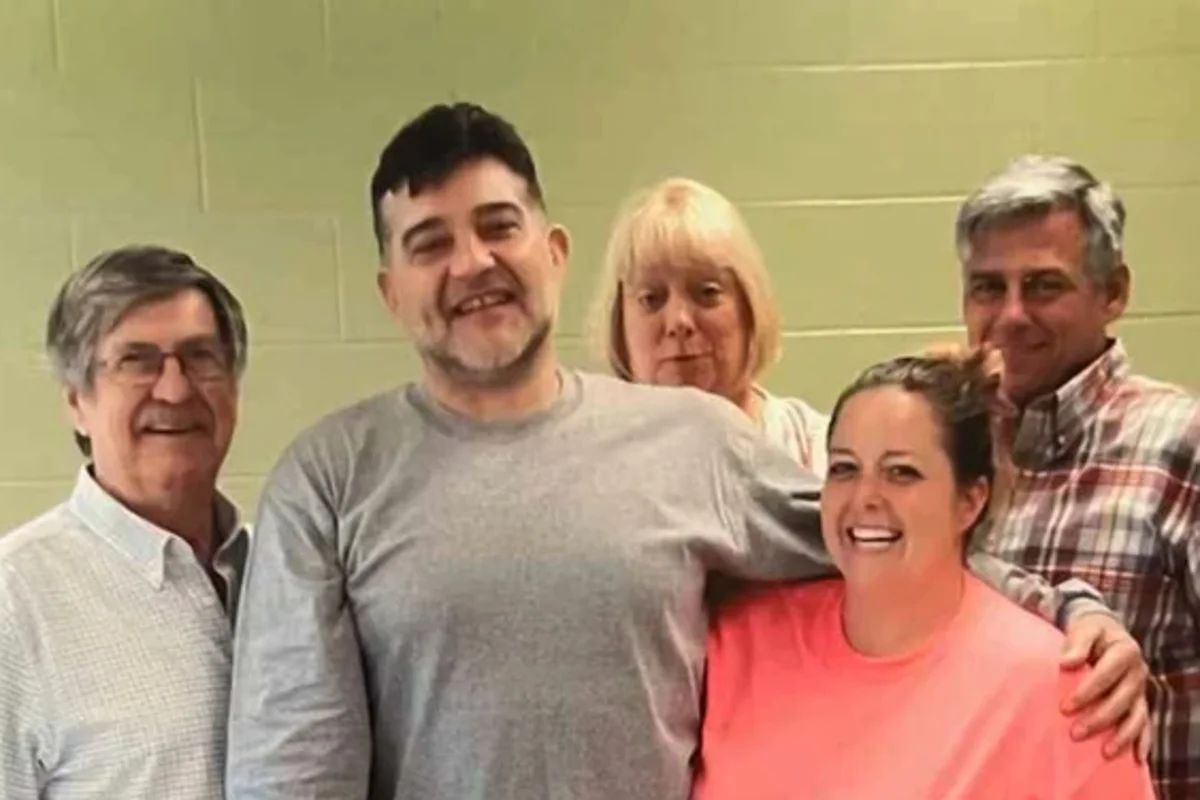
A Louisiana man, Jimmie ‘Chris’ Duncan, has been released on a $150,000 bond after spending nearly three decades on death row. His 1998 first-degree murder conviction was overturned due to discredited bite-mark evidence that judges described as ‘junk science.’ Duncan was convicted of raping and murdering 23-month-old Haley Oliveaux, the daughter of his then-girlfriend, Allison Layton Statham.
Fourth Judicial District Judge Alvin Sharp vacated the conviction in April after hearing expert testimony that the forensic evidence used to convict Duncan was ‘not scientifically defensible.’ The Louisiana Supreme Court ruled last month that ‘no rational juror’ would convict Duncan based on the scientific evidence presented at his original trial. Judge Sharp also cited the new forensic evidence and Duncan’s lack of any prior criminal history in granting him bail.
Duncan’s attorneys have called the ruling a major step toward clearing his name, saying the court had found ‘clear and convincing evidence’ pointing to his factual innocence. The case has become one of the nation’s highest-profile examples of convictions built on bite-mark analysis, a once-common forensic technique that has since been widely discredited.
Prosecutors’ case centered on testimony from forensic dentist Michael West and pathologist Steven Hayne, whose work has since been linked to multiple wrongful convictions. Duncan’s legal team argued the pair relied on flawed methods that modern forensic science has rejected. Haley’s mother, Allison Layton Statham, delivered emotional testimony during Duncan’s bail hearing, telling the judge she no longer believes Duncan killed her daughter and instead believes Haley accidentally drowned in the bathtub.
The case highlights Louisiana’s long history of wrongful convictions. According to the Death Penalty Information Center, more than 200 death row inmates have been exonerated nationwide since 1973, including 12 in Louisiana. Duncan plans to live with relatives in central Louisiana while the legal battle over his case continues. His attorneys described him as a model prisoner who spent years helping fellow death row inmates earn their GEDs and said he has strong community support as he continues his fight for full exoneration.
Prosecutors continue to seek reinstatement of Duncan’s conviction and are still pursuing the death penalty. The Ouachita Parish District Attorney’s Office has declined to comment because the appeal remains pending before the Louisiana Supreme Court.

.png?trim=0,0,0,0&width=1200&height=800&crop=1200:800)