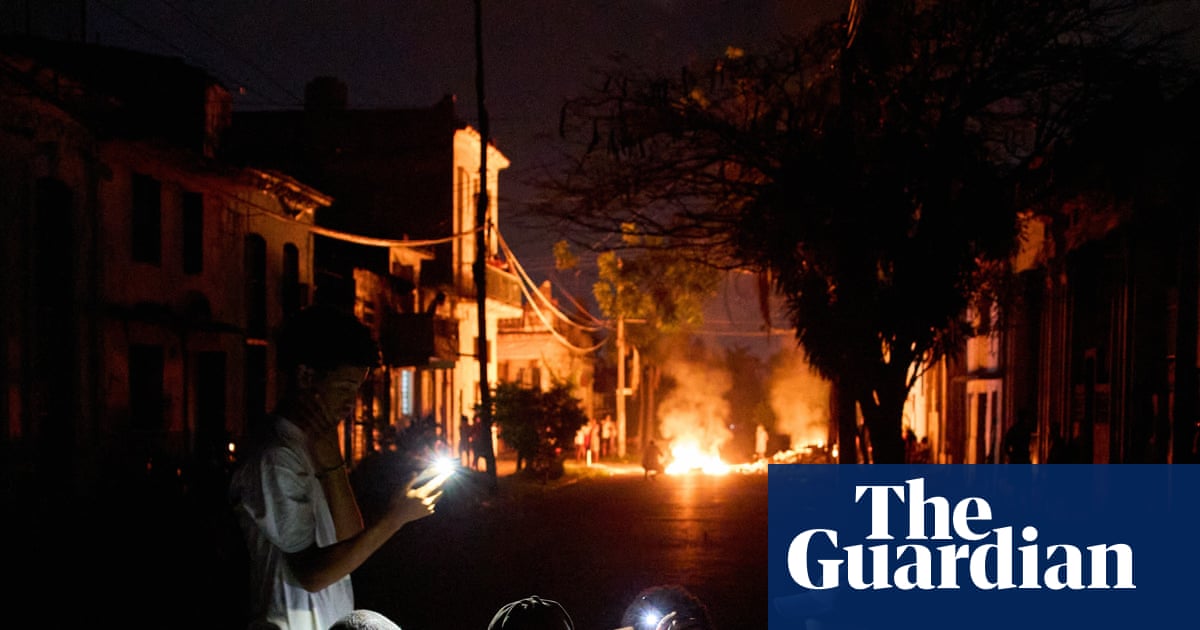
Cuba is teetering on the brink of collapse as the country’s antiquated electricity system struggles to cope with a six-month-long oil blockade imposed by the US. The 777-mile-long Caribbean island, home to 9.5 million people, has been plagued by nationwide power cuts, with the grid collapsing for the third time in 10 days on Tuesday. The parlous state of Cuba’s infrastructure is a long-standing issue, with the backbone of the system being old, broken, and tired power plants.
According to Jorge Piñón, a senior energy researcher at the University of Texas, the country’s energy system is on the verge of becoming unrecoverable. The US has been using sanctions to destroy Cuba’s industries, driving out foreign companies and crippling the economy. The situation on the ground is dire, with summer temperatures soaring and humidity at 80%.
Tempers are fraying, and the once-safe streets are now plagued by crime, with fights, break-ins, and muggings becoming increasingly common. The police, once ubiquitous, are now scarce, and victims often have to wait hours for them to arrive. Ever since 3 January, Donald Trump has promised Cuba will fall.
The US has been using sanctions to destroy Cuba’s industries, driving out foreign companies and crippling the economy. The Cuban government is under strain, with the US leaking discussions of a possible deal over political and economic reforms. Raúl Guillermo Rodríguez Castro, the grandson of Raúl Castro, has been at the center of these negotiations, but his recent interview with USA Today has sparked outrage among Cubans.
Rodríguez Castro’s display of wealth and privilege has been seen as tone-deaf, and many are questioning his role in the government. The US has been ramping up the pressure on Cuba, and the Cuban government has announced 176 measures to expand the private sector and invite in investment, but these efforts have been dismissed by the US state department as ‘superficial smoke signals’. The grid was reconnected at 7am on Wednesday, with people cheering if their block received electricity.
But everyone knew it was only temporary, and since then, across Cuba, the blackouts have been worse than before. Laura Garcia, an illustrator and single mother from Havana’s 10 de Octubre neighbourhood, said her neighbours now lived only in the present. ‘What I hear is a level of desperation that doesn’t allow the distance to discuss the future,’ she said. She had just gone 72 hours without power, and when pushed for further comment, only muttered: ‘What has to fall doesn’t fall.’
.png?trim=0,0,0,0&width=1200&height=800&crop=1200:800)