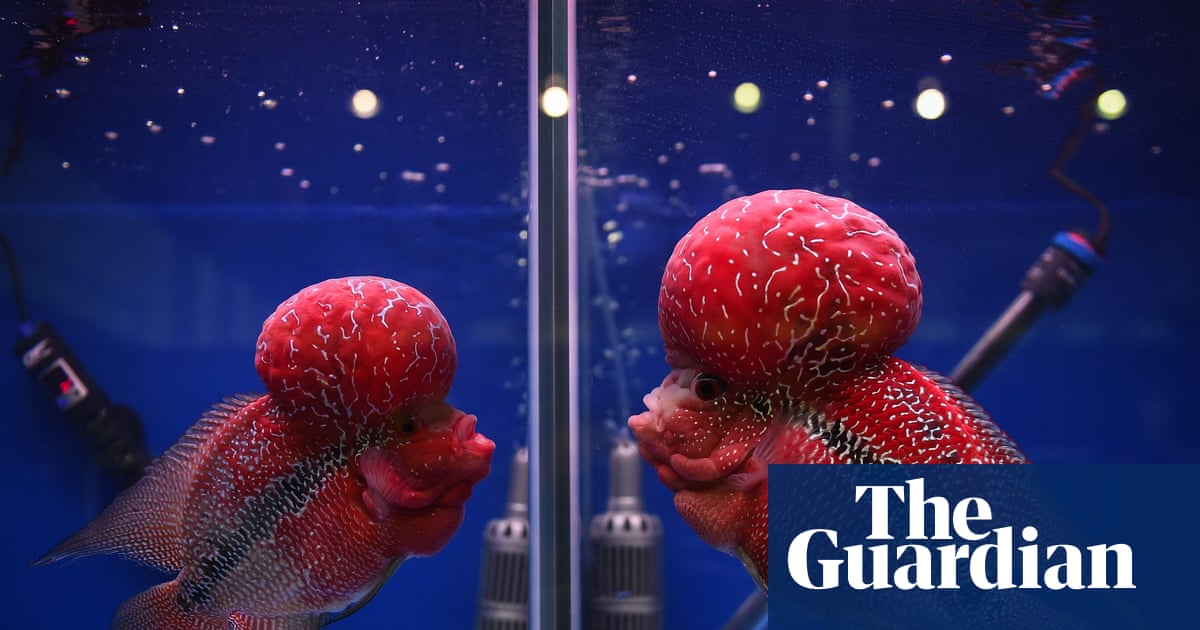
A human-bred hybrid fish, prized for its bright-gold color and prominent head humps, has integrated into a local ecosystem in the Philippines, raising concerns about the native biodiversity of the lake. The flowerhorn cichlids are believed to have escaped from breeding facilities into Lake Sampaloc, which sits in a volcanic crater, during a typhoon. Research by Hannah Nicole C Gasmen and Dr Janice A Ragaza of Ateneo de Manila University found that the flowerhorns are being incorporated into the existing aquaculture system because, like tilapia, they can survive difficult conditions.
The lake’s main farmed fish is tilapia, which supports local food production and commerce. However, the intentional stocking and sale of flowerhorns could expand an already established invasive population. The 104-hectare Lake Sampaloc is already strained by sewage, household runoff, aquaculture nutrients, and plastic waste, making it especially vulnerable to invasive species.
The native ayungin, or silver perch, once a common catch, has become increasingly rare and has been classified as endangered by the International Union for Conservation of Nature. Human-degraded habitats are generally the most vulnerable to invasion, and they are typically invaded by generalist species, according to Rupert Collins, a senior curator of fish at London’s Natural History Museum. Cichlids are particularly successful in adapting and are a textbook example of how new phenotypes can arise very quickly.
Concerns were also raised about potential parasites, as some flowerhorns in captivity have been found carrying Paracapillaria philippinensis, a roundworm capable of infecting humans. The study highlights a much wider issue, according to Collins. The release of species outside their natural ranges is a major contributor to biodiversity loss worldwide.
Climate change may also intensify the problem, as it may alter where aquaculture takes place and what species people are able to raise. This could mean production shifting between regions and more non-native species being introduced into new places. Dr Noël Juvigny-Khenafou, a lecturer in aquatic environmental science at the University of Stirling who was not involved in the research, noted that the research raised interesting questions: “What does that mean for the native species?
What does that mean for the function of the ecosystem? Is the introduced species leading the ecosystem towards collapse, or is it simply becoming part of a new ecological community?” The researchers proposed long-term solutions, including stronger pens, finer mesh, overflow barriers, routine inspections, and community-led monitoring. They also suggest that invasive fish could be harvested for use in aquafeed, subject to screening for pathogens, heavy metals, and microplastics.
Protecting and sustaining aquatic ecosystems requires a collaborative approach among communities, research institutions, and policymakers, according to Gasmen.