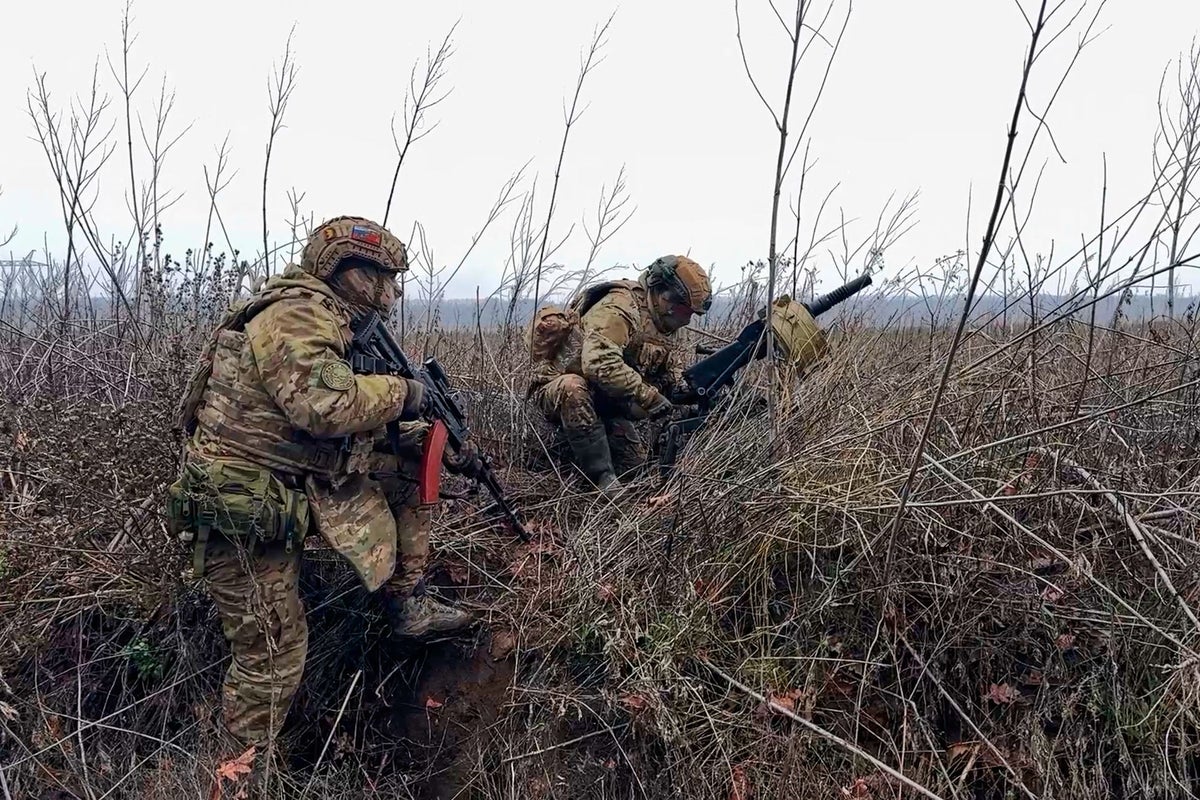
The Central Intelligence Agency chief, John Ratcliffe, has revealed that Russian soldiers fighting against Ukraine have an average life expectancy of 20 to 30 minutes on the battlefield. Speaking at a defence and innovation summit in Pennsylvania, Ratcliffe said that the CIA’s intelligence is consistent with open-source reporting from Ukraine, and that the high attrition rate is due in part to AI-powered drones, which he described as ‘specialised, low-cost killing machines.’
The comments come as Ukraine’s president, Volodymyr Zelensky, has dismissed defence minister Mykhailo Fedorov after just six months in the role, following a dispute between the reformer and Kyiv’s top general. Fedorov had sought to reshape Ukraine’s army into a more efficient fighting force and was credited with implementing positive reforms during his short stint in office. Hundreds of people took to the streets in the capital Kyiv and other Ukrainian cities to demand Fedorov be reappointed.
In a bid to quell the political crisis, Zelensky has appointed Yevhenii Khmara, acting head of Ukraine’s SBU domestic security service, as acting defence minister. Khmara has overseen Ukraine’s long-range strikes against Russia and has gained extensive experience with technological combat operations. Ukraine’s long-range strikes on Russia’s oil infrastructure and defence industry have helped weaken Moscow’s war machine in recent months, boosting Ukrainian morale at a critical moment in the more than four-year war.
Meanwhile, Ukraine’s foreign ministry has rejected Russia’s accusations over an attack that killed the chief engineer at the Russian-occupied Zaporizhzhia nuclear power plant. The ministry said that no independent confirmation of the Russian version or evidence of Ukraine’s involvement has been presented, and that information from Russian occupation authorities cannot be considered reliable. Russia has also hit port facilities in Ukraine’s Odesa and Chornomorsk, with details of the attack not immediately available.
In other news, Russia and Ukraine have carried out a swap of the remains of killed soldiers, with Moscow receiving 31 bodies in return for those of 501 Ukrainians. The two countries have regularly carried out such exchanges throughout the war, which is now approaching the four and a half year mark. Ukraine has repatriated 25,306 bodies since the start of the invasion, according to the Coordination Headquarters for the Treatment of Prisoners of War.
Ukraine’s parliament has also approved top energy executive Sergii Koretskyi as the country’s new prime minister, the third wartime head of the government appointed in a wider reshuffle announced by President Volodymyr Zelensky. Koretskyi is a widely respected senior energy executive with more than 20 years of experience in oil production and refining, energy retail, wholesale management, and international financing.

.png?trim=0,0,0,0&width=1200&height=800&crop=1200:800)