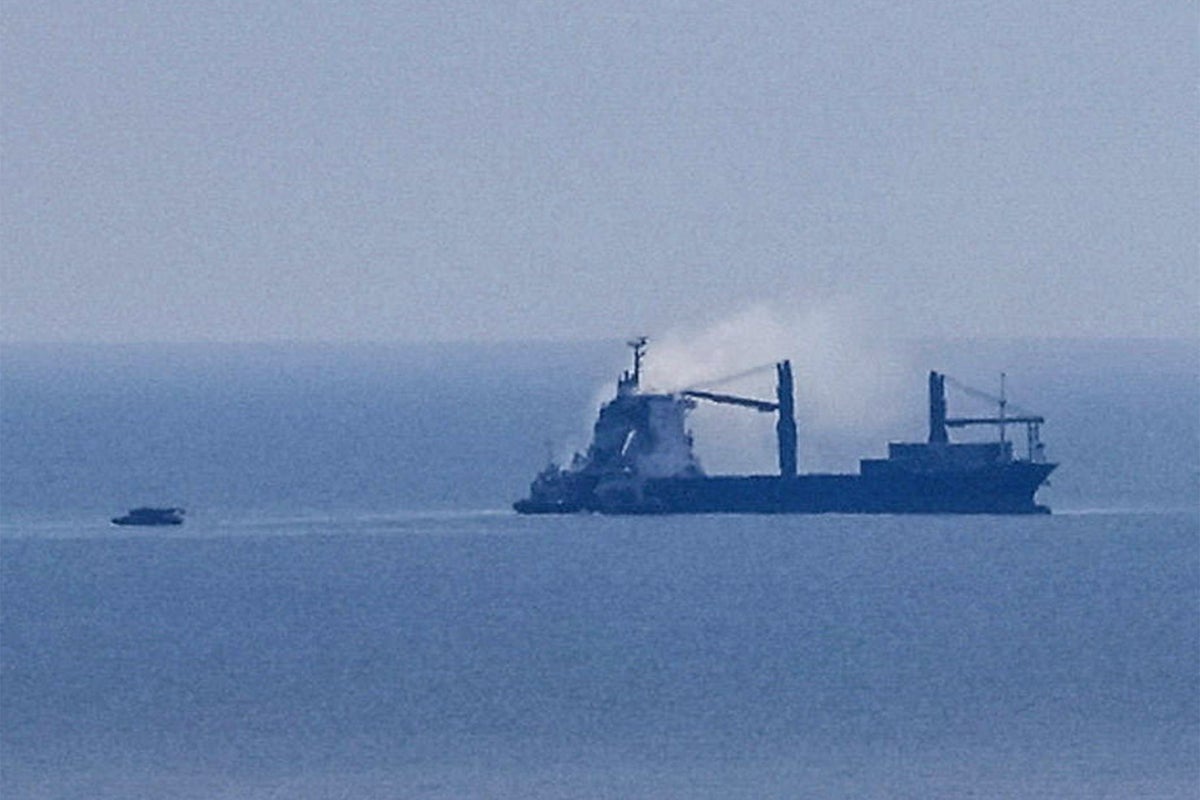
Ukraine’s drone forces have claimed to have hit 116 vessels in the Sea of Azov in the past nine days, with the aim of damaging Russia’s ‘shadow fleet’. The commander of Ukraine’s drone forces said its drones struck several tankers and cargo ships, as part of a campaign to disrupt Russia’s fuel supplies to Russian-occupied Crimea.
Russian foreign minister Sergei Lavrov has accused Ukraine of ‘acts of terrorism’ for attacking commercial vessels in the Sea of Azov and the Black Sea. He said Russia would continue to fulfill its obligations regarding food exports and the provision of humanitarian aid. However, Russia’s transport ministry has acknowledged it may need to reroute cargo shipments away from the Sea of Azov as Ukraine steps up attacks on Russian shipping in the area.
In a separate development, Ukrainian president Volodymyr Zelensky has announced that Ukraine will buy Rafale jets, air defense systems, and produce key Western missiles domestically under agreements formalized with France. The deal includes the purchase of 16 Rafale aircraft, four next-generation SAMP/T-NG air and missile defense systems, and the licensed production of Aster 30 interceptor missiles and AASM guided bombs.
Meanwhile, Russia has launched a barrage of drones and ballistic missiles at Kyiv, the fifth such attack on the Ukrainian capital this month. Ukrainian drones have also been approaching the Russian capital routinely, with Moscow mayor Sergei Sobyanin saying 340 Ukrainian drones had been dispatched to the area surrounding the capital over a 24-hour period on Tuesday, and most had been downed by anti-aircraft units far from the city.
The conflict has also seen increased attacks on oil infrastructure, contributing to gasoline shortages throughout Russia. Ukraine’s military said on Tuesday it had carried out drone strikes on the Salavat petrochemical complex in the Urals and the Afipsky refinery in southern Russia.
European Commission president Ursula von der Leyen has arrived in Kyiv, announcing new initiatives to integrate European and Ukrainian defense industries, allowing for increased production and faster delivery of military equipment. The move comes as France and several European allies unveiled a broader air-defense initiative aimed at developing a lower-cost anti-ballistic missile capability as Russia steps up attacks on Ukrainian cities.

.png?trim=0,0,0,0&width=1200&height=800&crop=1200:800)