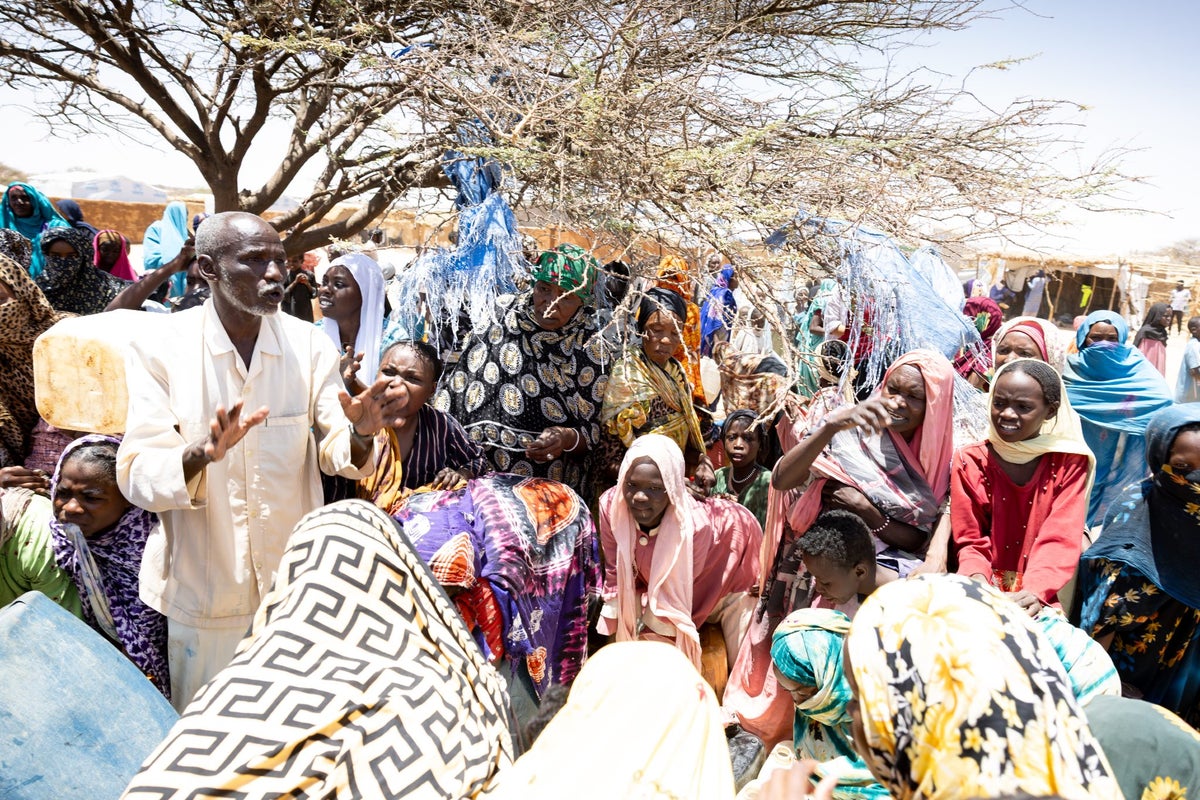
The war in Sudan has pushed more than a million refugees into isolated camps in eastern Chad, where the humanitarian network is on the brink of collapse. Camp populations are overwhelmingly women and children, living in cramped, tarpaulin shelters amid a harsh desert environment.
In Goudrane Camp, 27‑year‑old Maymauna cradles her son Mayamat, who lost all motor function after artillery struck their home in El Fasher. She reports no medical help is available and that the child’s body “just went limp.” Her account echoes that of dozens of survivors who have lost family members to the conflict.
Witnesses describe public executions, mass rape, and targeted killings by the Rapid Support Forces (RSF), a paramilitary group fighting the Sudanese Armed Forces. Human‑rights investigators label these actions as ethnic cleansing, while the United Nations has identified “hallmarks of genocide” in El Fasher. The RSF denies responsibility.
Water scarcity compounds the crisis. In Touloum Camp, 20 miles from Goudrane, mothers have buried children who could not survive the thirst. The French NGO Solidarités International is drilling boreholes and building pipelines, but a 128‑metre bore in Goudrane yielded no water. Residents like 66‑year‑old Hawa Idriss Adan wait 30 minutes for water that is often unavailable.
The situation is further destabilised by air strikes that have crossed into Chadian territory, raising fears that the war could spread. International actors, including the United States and the United Arab Emirates, are involved in disputes over arms supplies. As the UN General Assembly convenes, refugees in eastern Chad face ongoing insecurity, limited water, and insufficient funding to meet basic needs.