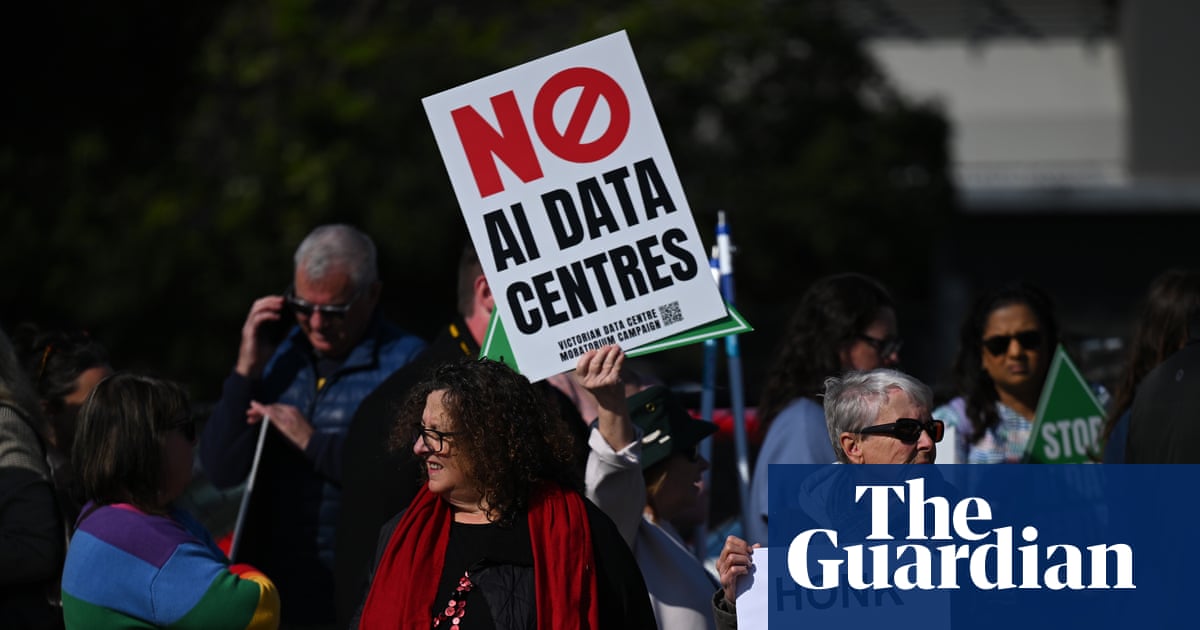
Australian politicians and business leaders are arguing that the growing public resentment of AI data centres is largely an imported sentiment from the United States, rather than a genuine domestic concern. While Australia is witnessing an increase in the construction of large data centres, officials claim that the scale of the build‑out is smaller, more regulated, and less damaging than in the US, and that the backlash is being amplified by heated US debates that spread through social media.
The backlash, which began in the United States last year, has erupted into a national conversation in Australia by 2026, prompting calls for a national moratorium, community protests, three government inquiries, and the development of state frameworks. State governments, eager for economic growth, have welcomed the investment and, in some cases, overridden local council approval processes. In July, Victoria’s former minister for economic growth, Steve Dimopoulos, warned that the growing resentment was a result of US social media influence, noting that US states were moving to ban large data centres and that such campaigns shape Australian public opinion.
Industry leaders have criticised the backlash as misleading. Belinda Dennett, head of the lobby group Data Centres Australia, said the debate is being fought on American facts, pointing out that the US has 5,400 data centres with 53.7 gigawatts of capacity compared with 252 in Australia with 1.4 gigawatts. She argued that the headlines portraying data centres as energy vampires and water hogs are based on a different market scale and should not be transplanted wholesale into Australian discussions.
The federal assistant minister for technology, Andrew Charlton, added that many Australian data centres are US‑owned, which may explain public cynicism. He warned that building data centres in Australia does not automatically mean capturing the economics of AI, and called for providers to enable access to compute for Australian start‑ups and researchers on favourable terms, noting the risk of becoming dependent on imported intelligence.