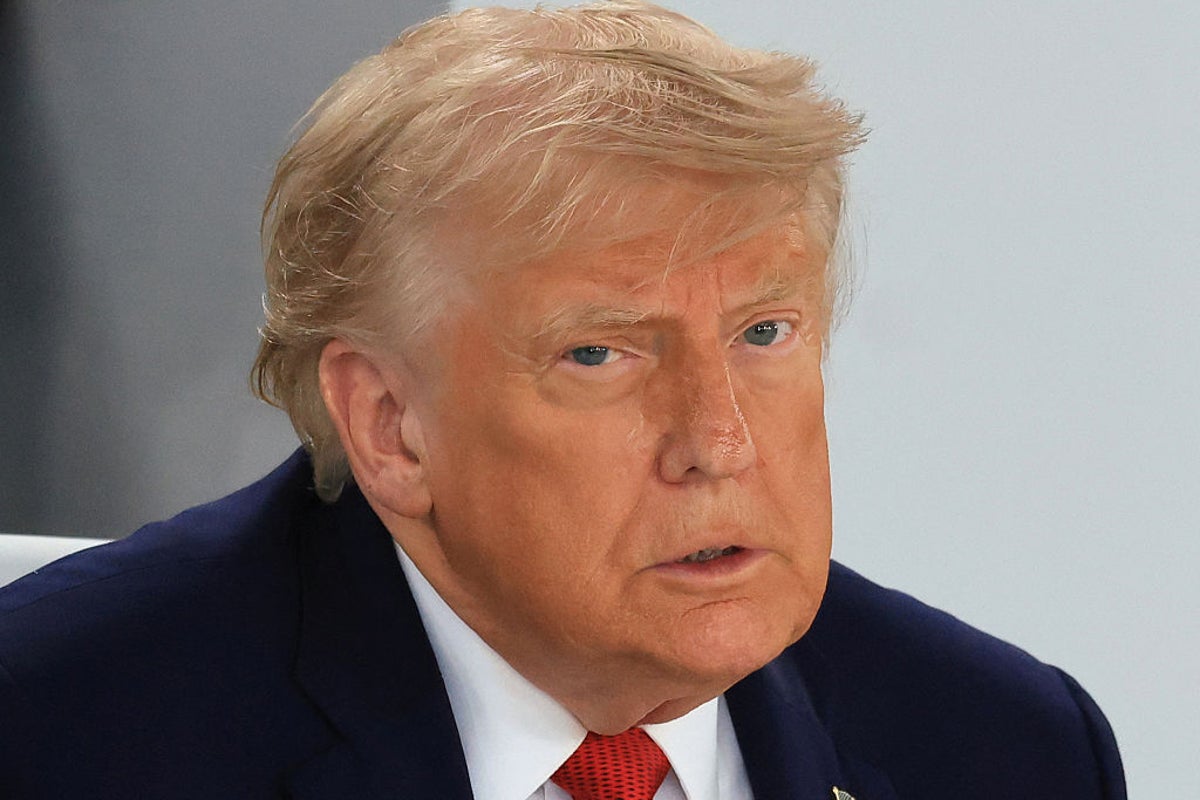
President Donald Trump has championed unrestrained development of artificial intelligence, dismissing concerns about its risks as a “hoax” and insisting that only a “strong and smart” president is needed to guard the industry. His comments sparked backlash on social media, with critics warning that a Terminator‑style apocalypse could become reality if AI is left unchecked.
Amid the debate, American voters have expressed strong opposition to the expansion of data centers that would store and run AI systems. Surveys by the University of Maryland’s Program for Public Consultation show that 80 percent of respondents support creating a federal agency to oversee AI programs, and 82 percent favor government controls on AI that makes critical decisions.
Despite public pressure, Congress has moved slowly. A bill proposed by Senator John Kennedy to require a “kill switch” for advanced AI was blocked by fellow Republican Rand Paul, who cautioned that premature legislation could stifle innovation.
Experts from Columbia University, Northwestern University and Purdue University argue that the current state of AI is far from the self‑improving, autonomous threat portrayed in science fiction. They point out that AI models react to prompts, lack independent goals, and require physical access and permission to cause harm. The real dangers, they say, lie in misuse of AI for disinformation, privacy breaches and unfair decision‑making.
While the specter of a runaway AI remains a popular cultural trope, scholars emphasize that existing safeguards and the technical limitations of today’s systems make a global AI apocalypse unlikely. The focus, they recommend, should be on addressing concrete harms such as data center environmental impact, algorithmic bias and the erosion of critical thinking in education.


.jpg?trim=1,0,1,0&width=1200&height=800&crop=1200:800)