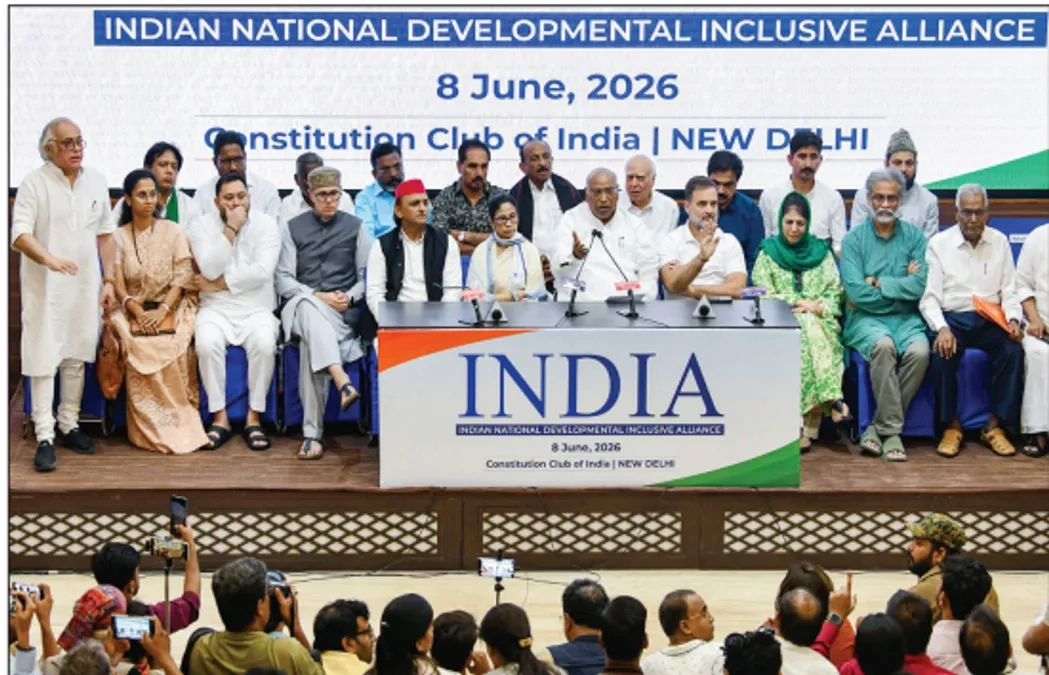
Three years ago, opposition leaders gathered at Sharad Pawar’s Delhi residence to decide seat‑sharing, coordinate campaigns and turn the INDIA bloc into a unified electoral force. The first meeting of the bloc’s 14‑member coordination committee, intended as its highest decision‑making body, was held on 13 September 2023, and it was meant to be the committee’s final session. Since then the committee has disappeared, and two of its original members have joined the BJP. An effort to reestablish national coordination was made this year.
On 8 June, opposition leaders held their first major formal meeting in more than two years, and Congress president Mallikarjun Kharge announced that the parties would now convene every two months. A meeting in Hyderabad was proposed for August but never took place, and a senior opposition leader told PTI that Congress had not yet set a date. When asked, a senior Congress leader said he had no information about the postponement.
The relationships among the parties that form the grouping have become strained ahead of the 2024 assembly elections in Uttar Pradesh, Punjab, Gujarat, Uttarakhand, Himachal Pradesh, Goa and Manipur, where allies in some states become rivals or potential partners in others. AAP, which left the bloc last year, has entered a bitter rivalry with Congress in Punjab and joined the Goa Forward Party for a non‑BJP, non‑Congress option in Goa, while planning to contest Gujarat alone. Even state‑level alliances that succeeded electorally, such as JMM‑Congress‑RJD in Jharkhand and National Conference‑Congress in Jammu and Kashmir, have complained about representation and power‑sharing, and differences surfaced when Congress objected to a full rendition of Vande Mataram at a government‑backed event and the NC responded in turn. The Congress‑DMK partnership in Tamil Nadu collapsed before the 2026 assembly election when Congress left the DMK‑led front and joined the ruling TVK‑led alliance.
The bloc’s state‑wise approach yielded 234 seats in the 2024 Lok Sabha elections, with significant gains in Uttar Pradesh, Maharashtra and Tamil Nadu, but it performed poorly in Bihar, Jharkhand, Gujarat and Delhi, and its constituents fought separately in West Bengal and Punjab. Subsequent assembly elections saw a reversal in Maharashtra, a loss in Haryana and Delhi, and defeats in Bihar and Assam, while the alliance struggled to coordinate seat allocation for 403 assembly constituencies. The group has occasionally united on national issues, such as a joint letter to the Chief Justice of India and opposition to the delimitation‑linked Constitution Amendment Bill, but it lacks a forum to resolve disagreements. With the next electoral cycle approaching, the absence of a coordination mechanism will again test the viability of the INDIA bloc.