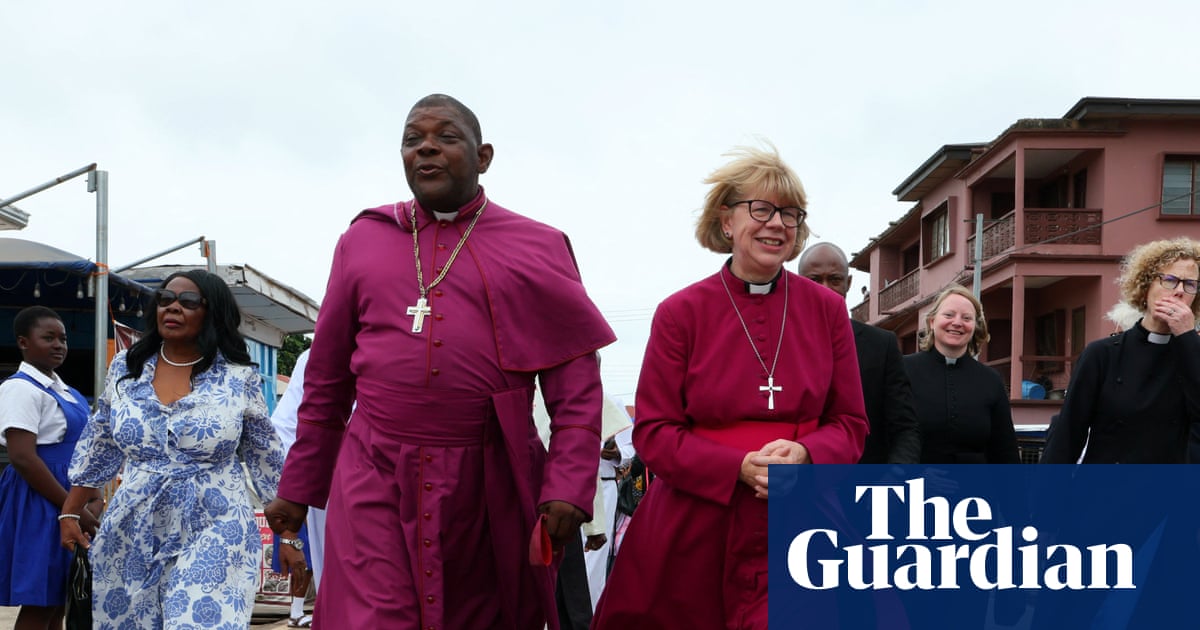
The Archbishop of Canterbury, Sarah Mullally, has reaffirmed her commitment to a £100m fund for communities affected by the transatlantic slave trade during a visit to Ghana and Cameroon. Mullally expressed ‘lament’ for the Church of England’s involvement in the slave trade and acknowledged the immense evil that drove it. The archbishop made the comments during a visit to the Cape Coast castle, a 17th-century fortress where thousands of enslaved Africans were held before being shipped across the Atlantic.
She was shown the dungeons used to keep enslaved people and prayed in a former Anglican chapel above them. Mullally also visited the ‘Door of No Return’, where enslaved people were loaded onto ships and ferried across the Atlantic. Mullally’s 10-day tour of Ghana and Cameroon is part of a global campaign to seek reparative justice.
Ghana has been spearheading this campaign and last month hosted a landmark conference attended by over 80 heads of state. The church set up the £100m fund committed to ‘a programme of investment, research and engagement’ in communities affected by slavery, but some have argued that the amount is insufficient to address the generational damage caused by slavery. The archbishop’s visit comes three years after her predecessor Justin Welby formally apologized for the church’s role in the transatlantic slave trade.
Welby acknowledged that some Christians did not see their brothers and sisters as created in the image of God, but as objects to be exploited. Mullally reaffirmed her commitment to the fund, stating that ‘we played a part in the transatlantic slave trade… part of the Christian belief in repentance is about action, so we are putting in place action to support those communities that feel the legacy of the slave trade.’ Mullally’s visit began in Accra, 90 miles (145km) east of Cape Coast, where she visited four local parishes and delivered the sermon at a special Eucharistic service at St Joseph the Worker Anglican church in the Kaneshie area, which was officiated by an all-female clergy from the Anglican church of Ghana. She also met the Ghanaian president, John Mahama, earlier in the tour, along with her husband, Eamonn Mullally.
The archbishop also preached at a service of more than 1,000 nurses in the town of Mampong, where she commissioned a new campus clinic named after her. On a visit to the palace of the Asantehene, the traditional ruler of the Asante people, in the city of Kumasi on Wednesday, Mullally wore a special cassock and cape lined with kente cloth that excited palace chiefs. However, not everyone has been enthusiastic about the archbishop’s visit.
Accra-based accountant Kenneth Mordzro believes that the church can play a greater role in reparation efforts, stating that ‘they should bring back the gold and artefacts they stole from our ancestors during the colonial days,’ referring to loot taken by the British government during the Anglo-Asante wars of the 19th century. The archbishop’s visit is part of a broader effort to address the legacy of the transatlantic slave trade. The Church of England has acknowledged its role in the slave trade and is taking steps to make amends.
Mullally’s commitment to the £100m fund is a significant step towards reparative justice, but some argue that more needs to be done to address the ongoing impact of slavery.