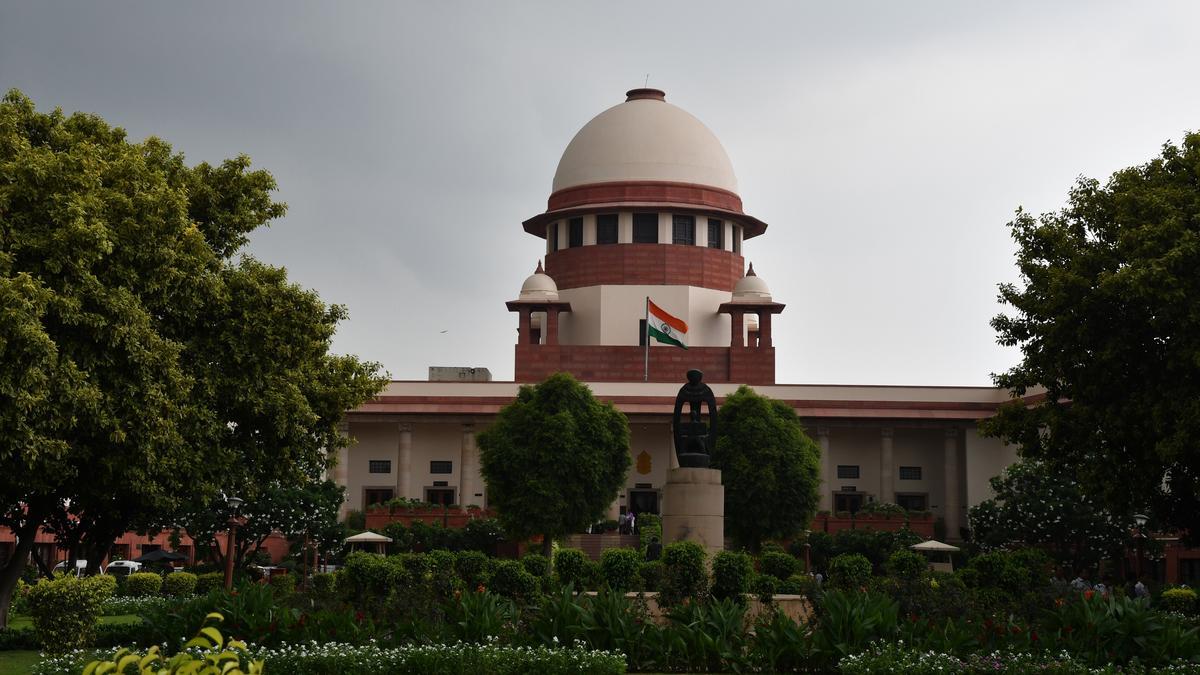
The Supreme Court of India has agreed to examine a petition that claims the West Bengal government is using data from the Special Intensive Revision (SIR) to delete names from various welfare schemes, including those related to food security, women’s welfare, and Backward Caste certifications. The petition, filed by Prasenjit Bose, chairperson of the SIR committee, West Bengal Pradesh Congress Committee, argues that deletion from the electoral roll has resulted in serious civil consequences extending beyond the right to vote. The court issued notice to the Election Commission of India, the West Bengal government, and the Chief Electoral Officer of the State.
Justice Joymalya Bagchi, one of the three judges on the Bench headed by Chief Justice of India Surya Kant, observed that the SIR outcome cannot be used for any other purpose, including determining citizenship. The Election Commission has a corresponding duty to refer the matter to the government for adjudication under the Citizenship Act. The petition drew attention to three orders passed by the West Bengal government in May and June, which linked the deletion of beneficiaries under the Public Distribution System (PDS) and the Annapurna Yojana scheme to the outcome of the SIR.
The petition also highlighted the slow pace of appeals being heard by the tribunals, with only 38,000 appeals disposed of out of a total 34 lakh filed in West Bengal. The senior counsel representing the petitioner argued that mechanisms should be put in place to ensure transparency and accountability in the appellate process. The petition flagged the absence of publicly available guidelines on the filing of documents, issuance of notices, conduct of hearings, entitlement of excluded electors to file appeals, supply of reasoned orders or timelines for disposal of the appeals.
The senior counsel contended that these adversely affect those whose names have been deleted in the SIR process and could possibly lead to their names being deleted as beneficiaries. The Supreme Court agreed to hear the case at an early date, considering the issues involved. The petition argued that civil rights of voters are at risk, particularly those who are poor, illiterate, and uneducated, and that ground-level legal assistance and comprehensive guidelines in local languages are necessary to ensure meaningful access to appellate remedies.



