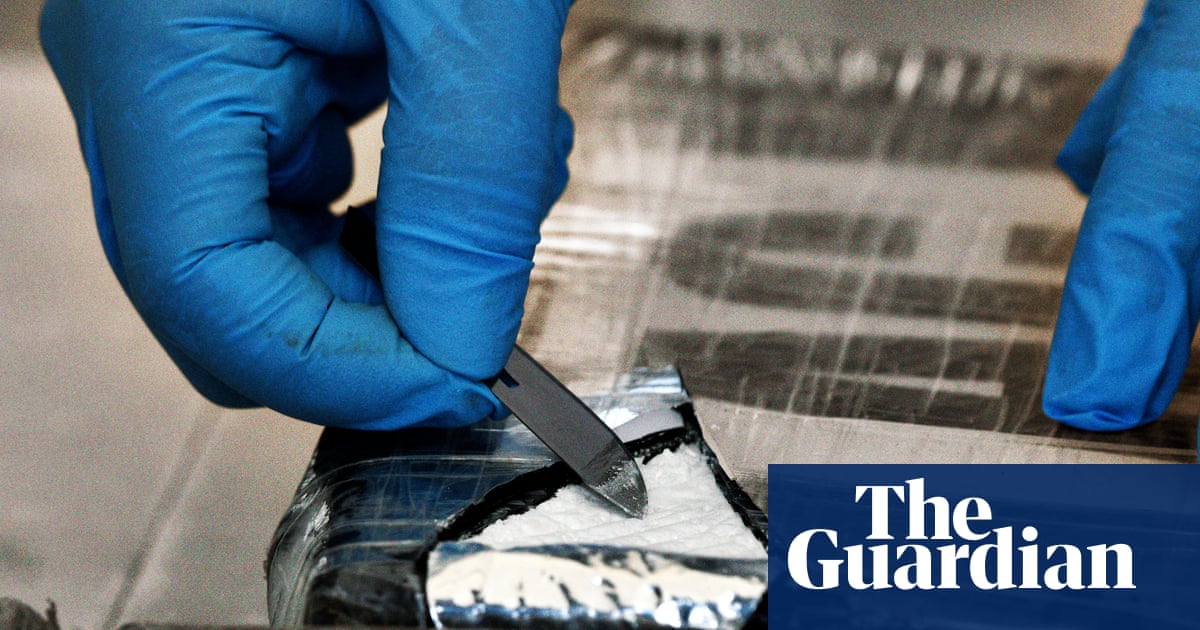
A four‑month investigation by the Guardian has linked the rise in cocaine trafficking to the growing presence of Latin American criminal networks in Europe, where they have forged ties with local mafia organisations.
The investigation, drawing on databases, police and intelligence agencies, and interviews with judges, prosecutors and experts from eight countries, shows that cartels and factions from Colombia, Brazil, Ecuador, Venezuela, Mexico and the United States are active in at least 12 European countries. Between 2014 and 2024, the quantity of cocaine seized rose 471 percent and more local laboratories processing cocaine derivatives were dismantled.
Identified groups include Mexico’s Sinaloa cartel and the Jalisco New Generation cartel (CJNG); the Clan del Golfo mafia, and the guerrilla organisations ELN and dissident factions of Farc in Colombia; Brazil’s Primeiro Comando da Capital (PCC) and Comando Vermelho (CV); Venezuela’s Tren de Aragua; and US‑originated Barrio 18 and MS‑13 gangs, which also operate in Central America. These organisations have built a prominent presence in Spain, Portugal, the Netherlands, Belgium and France, and have been noted in Germany, Romania, Croatia, Slovakia and, according to Gi‑Toc, Bulgaria.
Daniel Brombacher, director of the Europe Observatory at Gi‑Toc, said the presence of Latin American groups in new geographies is unprecedented. He added that recent police operations uncovered Mexican‑run methamphetamine labs in southern France, north‑eastern Poland and Brandenburg, and that Latin American groups are appearing along the Balkan route. A Europol report this year notes that Latin American MTCNs have settled in the EU and direct operations that affect the EU, especially mobile criminal networks involved in organised property crime.
Global cocaine production reached a record 4,100 tonnes in 2024, more than four times the 2014 level, according to the UN Office on Drugs and Crime’s 2026 World Drug Report. South America remains the main production hub, with coca cultivation covering 385,000 hectares. Europe has become a key market because it offers higher profit margins; European police have confiscated more drugs than American forces, and Europe now accounts for about a quarter of global consumption. Europol reports that of 731 MTCNs operating across Europe, 149 are linked to Latin American organisations, 67 have Latin American members and 22 are mainly composed of Latin Americans.