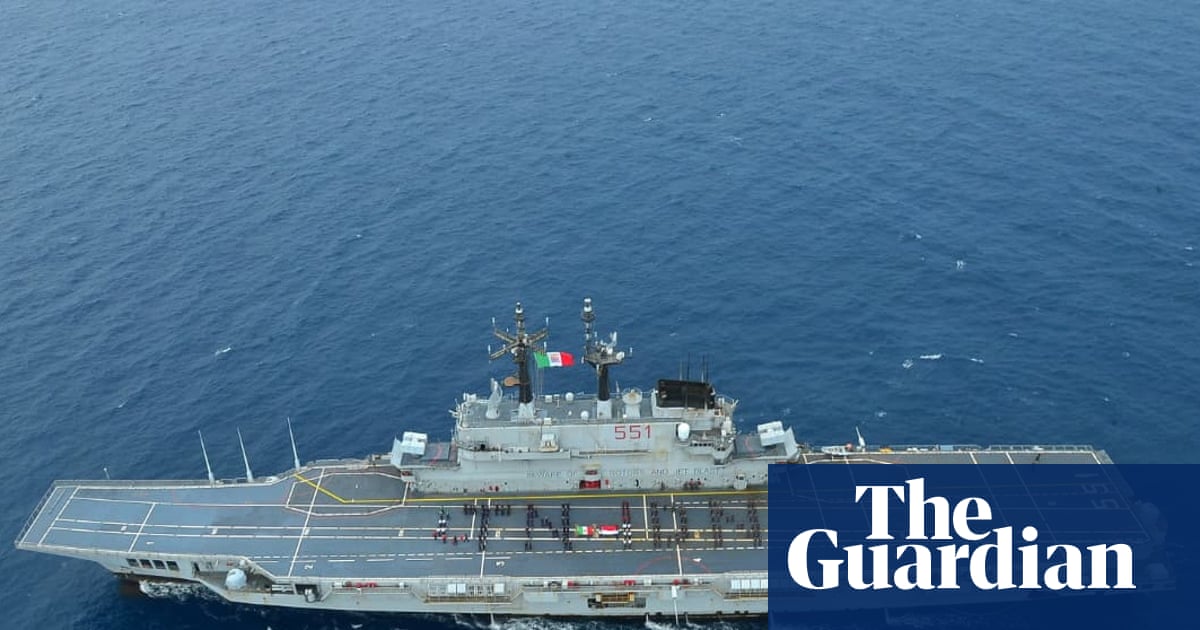
Indonesia has received its first aircraft carrier, a former Italian warship that the government says will strengthen the archipelagic nation’s maritime security and disaster response capabilities. The 41‑year‑old former ITS Giuseppe Garibaldi, capable of short‑takeoff and vertical‑landing aircraft and helicopters, arrived Friday morning at a naval base in North Jakarta’s Tanjung Priok port, where it was welcomed with a military ceremony.
Italy agreed in March to give the carrier, retired in 2024, to Indonesia as part of a broader defence engagement. The move allows Italy to avoid decommissioning costs while pursuing deals on submarines and aircraft. The transfer makes Indonesia only the second Southeast Asian country to operate a carrier, after Thailand’s HTMS Chakri Naruebet, commissioned in 1997.
The ship will be formally commissioned next week as KRI Gajah Mada, named after the 14th‑century Majapahit military leader. President Prabowo Subianto’s administration prioritises defence development, including submarines, frigates, fighter jets and missiles. The carrier is intended to serve as a mobile command centre and support hub for helicopters, drones and maritime operations across Indonesia’s thousands of islands.
The acquisition has sparked debate among analysts, economists and opposition politicians. Indonesia’s finance ministry approved $450 million in financing for the program in 2025, but lawmakers warn the retrofitting cost could reach 16 trillion rupiah (about $900 million). Critics question whether a carrier is necessary for Indonesia’s defence or disaster‑relief needs, especially amid fiscal pressures and costly domestic programmes.
Experts caution that operating a carrier is extremely expensive and may not be justified. Muhammad Fauzan Malufti of the Center for Strategic and International Studies urged transparency on operational costs and warned that benefits could be outweighed by expenses. Military analyst Khairul Fahmi noted that Indonesia’s priority should be submarines, frigates and asymmetric weapons, but acknowledged that a carrier could serve as a symbol of national power and a multifunctional platform if the country aims to position itself as a major maritime nation.




.jpeg?trim=0,11,0,11&width=1200&height=800&crop=1200:800)