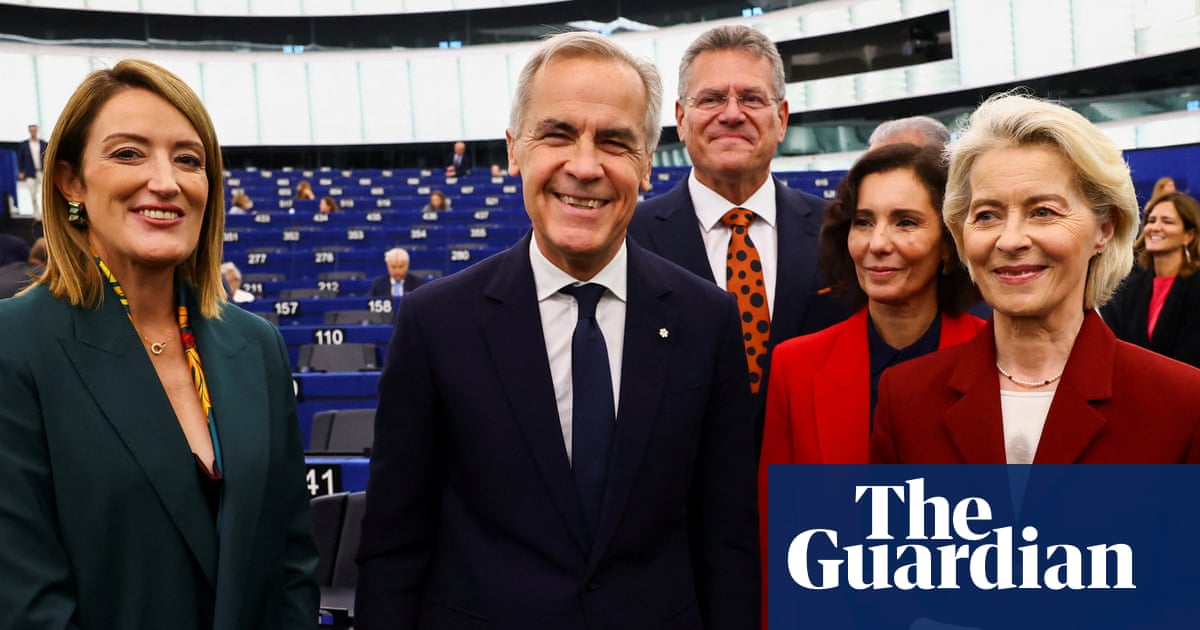
Mark Carney was greeted with enthusiasm in the European Parliament after he delivered a speech welcoming a proposal for Canada to become the EU’s first associate member. Politicians lined up to shake his hand and take selfies. A German Green MEP, Terry Reintke, described the moment as historic, saying, “Europe has extended a hand, and Canada has taken it,” while sporting a Canadian ice‑hockey shirt.
The invitation, issued a day earlier by European Commission President Ursula von der Leyen, was met with criticism from former U.S. President Donald Trump, who warned of “heavy tariffs” if the proposal materialised. The term “associate membership” is not legally defined, and senior politicians have expressed uncertainty about its meaning. A senior EU official said, “This has just raised lots of questions. So people are talking more about what an associate membership means instead of this unique partnership and alliance for the future that EU‑Canada relations should be about.”
Germany’s chancellor Friedrich Merz said the country was open to new models that reflect the special significance of the EU‑Canada relationship, but his spokesperson urged that the label be reconsidered. Merz had previously suggested associate membership for Ukraine as a stepping stone to EU accession, a proposal that other member states quickly dismissed. EU diplomats noted that von der Leyen’s suggestion seemed “a bit far out” and that the phrase was “empty,” leaving it to member states to determine its substance.
Both sides highlighted shared interests in AI, energy security, critical raw materials, quantum computing and Arctic cooperation. Carney praised the 2016 EU‑Canada Comprehensive Economic and Trade Agreement, yet ten member states, including France, Italy and Poland, have not ratified it, a situation unlikely to change amid upcoming elections. Meanwhile, Canada’s “Buy Canadian” policy and the EU’s Industrial Accelerator Act, which would require member states to meet “made in Europe” criteria for public spending on green technologies, illustrate policy tensions. Questions remain about how Canada would integrate into the EU’s single market, where the four freedoms cannot be split. The applause has faded, leaving many complex issues to be addressed.



.jpeg?trim=0,11,0,11&width=1200&height=800&crop=1200:800)