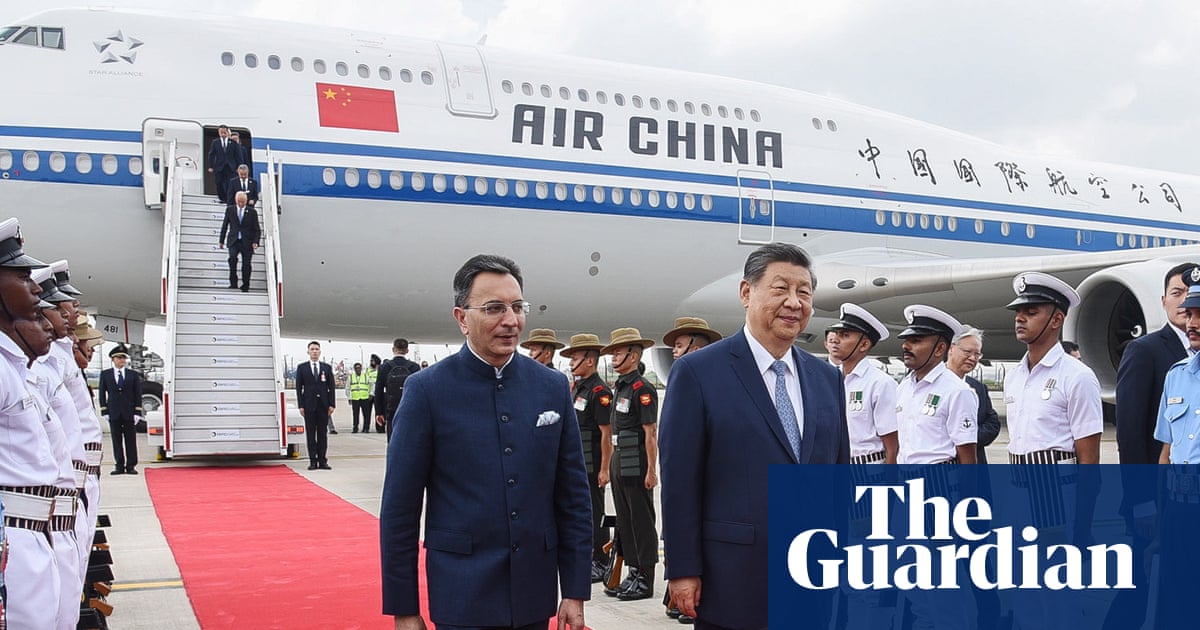
The Chinese president, Xi Jinping, was greeted with a red‑carpet welcome in India as he arrived for a two‑day BRICS summit, a symbolic display of thawing relations between the two regional rivals. An honour guard of Indian soldiers and traditional dancers escorted him from the plane, and he was later set to attend a gala dinner hosted by Prime Minister Narendra Modi.
Xi’s visit marks his first trip to India in seven years and follows a deadly 2020 border clash that left 20 Indian and four Chinese soldiers dead. The summit is seen as a major step toward reconciliation, with China’s foreign ministry saying it was willing to work with India to manage differences and be “good neighbours and friends.” Flights and high‑level contacts between the two nuclear‑armed giants have gradually been restored.
The BRICS gathering, held in New Delhi, brings together Brazil, Russia, India, China and South Africa, and now includes Egypt, Ethiopia, Indonesia, Iran, Saudi Arabia and the United Arab Emirates. The bloc, conceived as a counterweight to Western dominance, has expanded since 2009 but faces internal fractures, such as Iran’s attacks on Saudi Arabia and the UAE and a failure of foreign ministers to agree on a joint statement in May. At the summit, members unanimously adopted the “New Delhi declaration,” calling for peaceful resolution of disputes through dialogue and for maximum restraint in the Middle East.
China and India hold differing views on BRICS’ role. China seeks to expand the bloc’s power as a counterweight to U.S. influence, while India adopts a more cautious stance, viewing BRICS as a bridge between the West and the developing world. Modi opened the talks by stressing that BRICS is “not against anyone,” and analysts note that India must balance its strategic hedging amid a U.S. presidency that has been disruptive for the forum.


.jpeg?trim=0,11,0,11&width=1200&height=800&crop=1200:800)