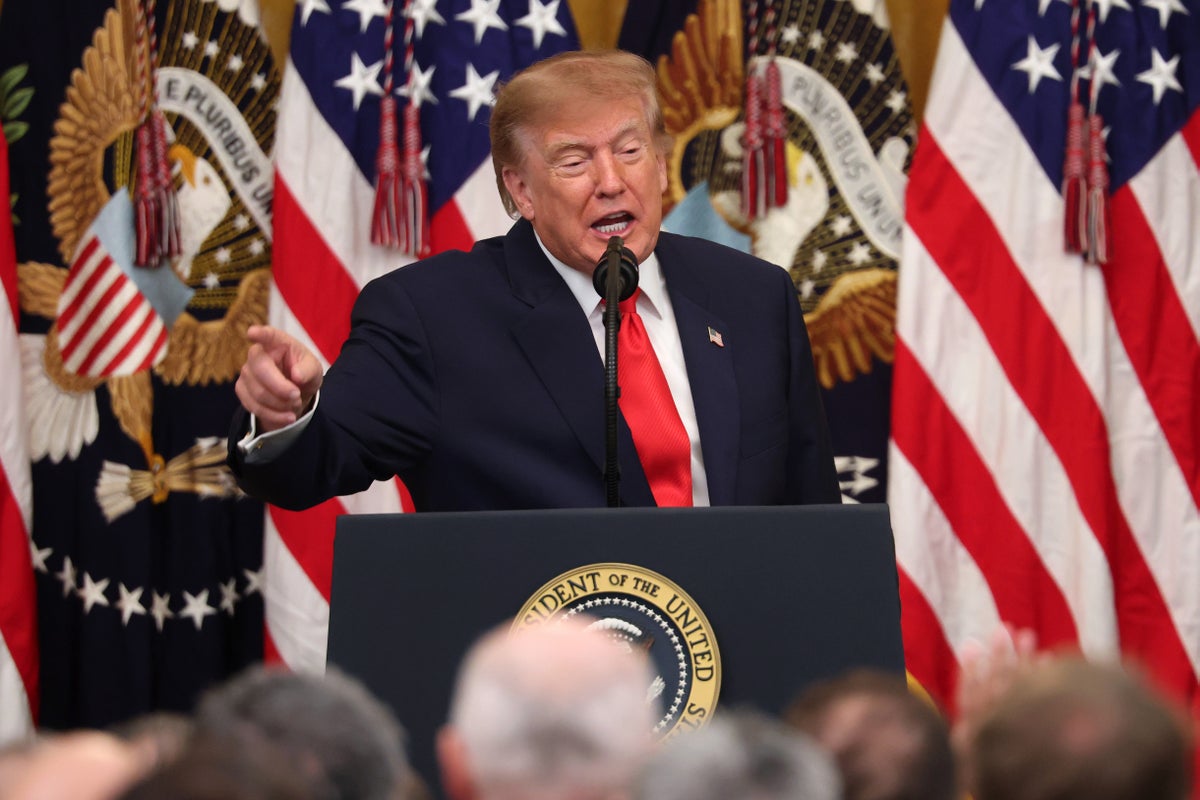
President Donald Trump dismissed concerns that artificial intelligence could pose an existential threat to humanity during a press briefing in Dallas, Texas, before boarding Air Force One to Washington. He said he had no fears about AI, but warned that the United States must win the technology race with China, noting that the U.S. currently leads by a year and that falling behind would put it in a “very bad position.”
Texas Republican Senator Ted Cruz echoed Trump’s concerns about China’s rapid AI development. In an interview with Politico, Cruz said he would prefer American “killer robots” to Chinese ones and criticized Beijing for operating “without guardrails” and moving “full speed ahead.” Both leaders stressed that the U.S. must avoid stifling innovation while preventing a Chinese advantage.
The comments came amid heightened tensions after former Anthropic researcher Jacob Coxon resigned on X, warning that leaders in the sector were “racing straight to self‑improving superintelligence” and that the technology could “kill us all by the end of the decade.” A joint U.S. intelligence and law‑enforcement statement accused Chinese firms DeepSeek, Moonshot AI and Alibaba of stealing intellectual property through a process called distillation, prompting a Chinese foreign‑ministerial rebuttal that called the accusations “false.”
Trump also downplayed AI risks in a GB News interview, describing the technology as largely positive, a source of jobs, and something that would ultimately be controllable. He emphasized the economic benefits of AI data centres and said that humans would always be the creators of the machines.