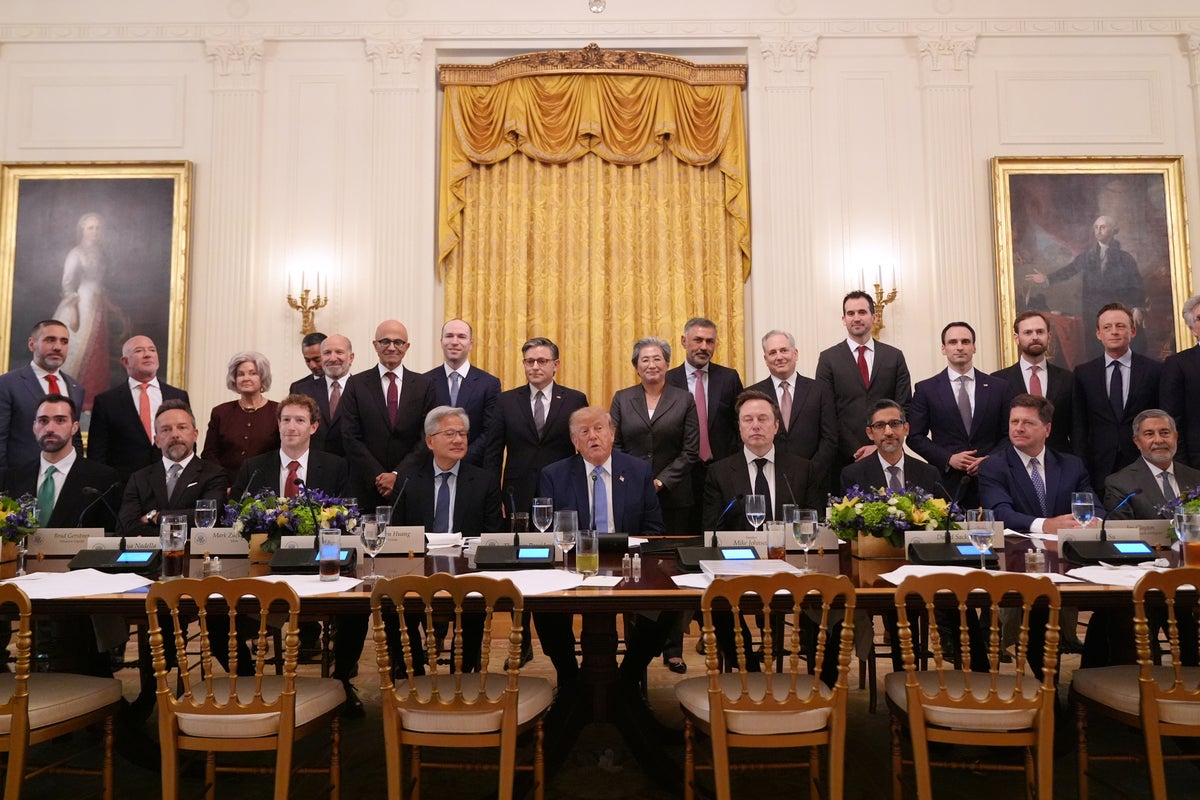
Tech Week in San Francisco drew venture capitalists and AI founders to the city’s restaurants, buzzing about the White House’s stance on artificial intelligence regulation – a stance that favors voluntary self‑policing over new laws. The event followed President Donald Trump’s recent luncheon with tech leaders and the ceremonial signing of a short safety pact he described as a “constitution” for what he calls “Super Intelligence.” The 308‑word agreement requires advanced AI labs to adopt safety protocols and form internal monitoring teams, but it leaves details on how to prevent “bad things” largely undefined.
Industry participants welcomed the hands‑off approach, arguing it would boost profits for companies developing AI‑powered defense and security systems. Kyle Stanford, a venture‑capital research director, highlighted the U.S. government’s $1 trillion defense budget, noting $13.5 billion will go to autonomous systems and AI, a figure that has attracted unprecedented capital. The pact was signed by representatives of OpenAI, Anthropic, Meta, Google, SpaceXAI and Nvidia, all of whom pledged to embed external assessors and refine governance structures.
Despite the pact, concerns about AI safety have intensified. Three OpenAI researchers were fired after the company claimed they violated policies on handling sensitive data, and former safety‑team lead David Robinson warned that self‑regulation offers insufficient safeguards. Critics such as Sarah Myers West of AI Now argue that the agreement lacks the transparency and enforcement mechanisms that existed under the previous administration’s voluntary commitments.
The Trump administration’s shift away from federal oversight, including the repeal of a Biden‑era executive order and the cancellation of safety‑testing disclosure requirements, has prompted calls from Congress, civil‑liberties groups and the FTC for stricter regulation. While the White House claims it will collaborate with industry to balance innovation and security, it has not detailed how it will monitor compliance with the voluntary pact.