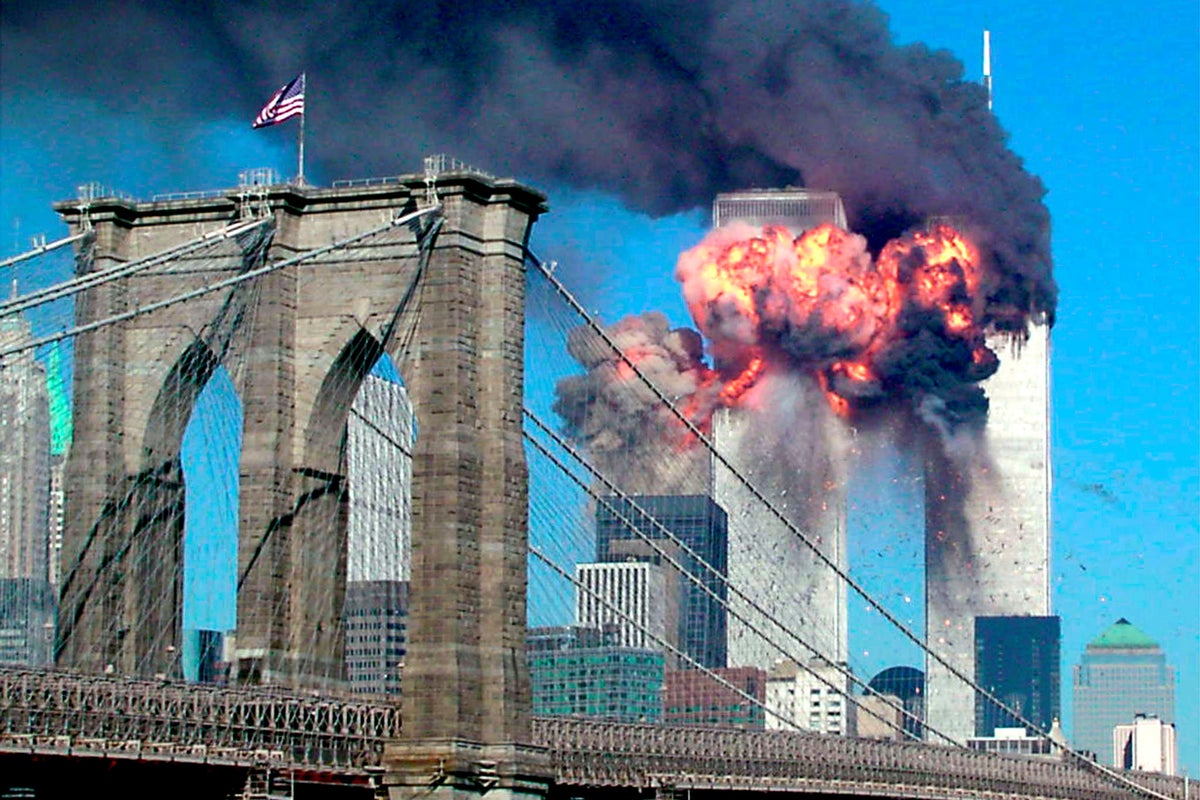
The trauma of 9/11 remains vivid 25 years after the attacks that killed almost 3,000 people in New York City and Washington, DC. Images taken as the day unfolded—first a plane into the North Tower, then the South Tower, a third striking the Pentagon, and a fourth crashing in Pennsylvania—provide a stark record of the events that shocked the world.
The first impact occurred at 8:46 am when American Airlines Flight 11 struck the North Tower, trapping workers on floors 93 to 99 until the building collapsed at 10:28 am. Seventeen minutes later, United Airlines Flight 175 hit the South Tower at 9:03 am, confirming that the attacks were deliberate. The Pentagon was hit at 9:37 am, and United Flight 93 crashed in a Pennsylvania field after passengers fought the hijackers for control of the cockpit. In total, 2,016 workers in the towers died, 412 emergency responders lost their lives, and 91,000 rescue and recovery personnel were deployed to clear the scene.
Rescue efforts began immediately; the last survivor was pulled from the rubble 27 hours after the towers fell. Images captured the fear of those fleeing, the exhaustion of firefighters such as Gerard McGibbon, and the resilience of survivors like Edward Fine, who later described a photo of him on the 79th floor as symbolising American perseverance. The day also saw the death of Marcy Borders, a bank teller who earned the nickname “the Dust Lady,” and the post‑9/11 death of firefighter Rev. Mychal Judge.
The photographs, viewed by millions worldwide, helped shape a global understanding of the day’s impact. They also captured moments of hope—crowds gathering for vigils, debris being cleared, and citizens rebuilding their lives. Today, the former World Trade Center site, known as Ground Zero, stands as a memorial to those lost and a reminder of the enduring legacy of 9/11.