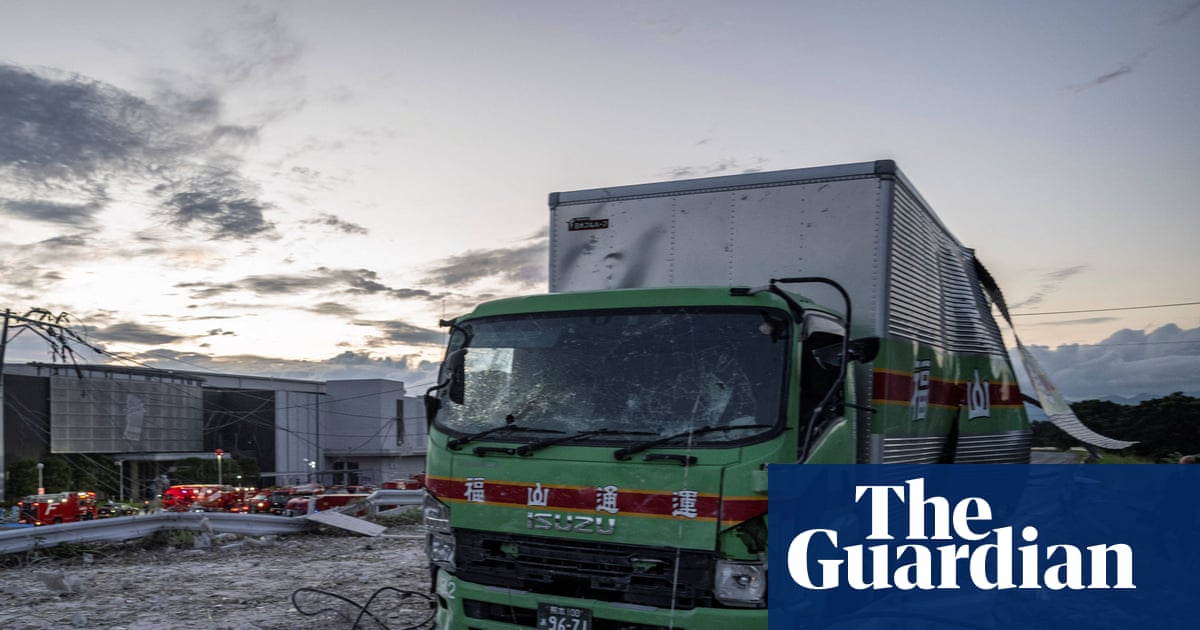
A powerful earthquake struck southern Japan on Tuesday, killing at least 13 people, injuring hundreds, and knocking out power and water to tens of thousands. The 6.8 magnitude quake registered a maximum 7 on the Japanese shindo intensity scale when it struck Kumamoto prefecture on the southern island of Kyushu. According to the prime minister, Sanae Takaichi, rescue teams are racing against time to find and rescue as many people as they can.
Takaichi stated that there are people who are still waiting to be rescued, and the government will go all out to find and rescue them. The government has reported that more than 9,000 people were in evacuation centres across the country early Wednesday. Government spokesman Minoru Kihara said, ’We have received reports of seven people with serious injuries and 29 with minor injuries.
Furthermore, as of 7:00 am today (2200 GMT Tuesday), 9,186 people have sought refuge in 506 evacuation centres across five prefectures, including Kumamoto and Fukuoka.’ The quake caused widespread damage, including a chimney collapse at a paper mill in Yatsushiro, where two workers were found and taken to hospital in a state of cardiac arrest, with nine others missing. An explosion was also reported in an Aeon shopping mall, which houses around 200 outlets, in the prefecture shortly after the earthquake, resulting in the deaths of two women in their 20s. The Japanese military mobilised 3,600 personnel for disaster relief operations and sent 20 aircraft to assess the damage from the air.
Hundreds of first responders from neighbouring prefectures arrived in the affected areas on Tuesday evening. The Japan Meteorological Agency warned that areas with the biggest tremors would remain at risk of further strong quakes and landslides for about a week. By Wednesday morning, more than 60 aftershocks had been recorded, ranging in magnitude from 1 to 4.
A tsunami warning was issued immediately after the quake but was lifted within two hours. Nearly 50,000 households were without power late on Tuesday, along with 140,000 without water. Temperatures in the region were forecast to top 35C on Wednesday, with high humidity increasing the chance of heatstroke for those without access to air conditioning and water.
Despite the earthquake’s intensity, relatively few buildings collapsed, reducing the number of fatalities and injuries. Japan has strict construction standards, and earthquake resistance requirements for new buildings have been raised multiple times over recent decades. Technology such as apartment blocks with foundations laid on rollers that can sway means newer structures are able to withstand intense shaking.
Chiharu Hara, a 35-year-old recruitment agent who was in Kumamoto, told AFP that she was ‘terrified’ when the quake struck. ‘The office swayed violently side to side. I was afraid it would collapse. Everyone panicked,’ Hara said.
The quake’s epicentre was about 12 miles south of Kumamoto, central Kyushu island’s largest city, with a population of about 700,000. Japan is located along the ‘ring of fire’ of volcanoes and oceanic trenches in the Pacific basin, making it one of the world’s most earthquake-prone countries, with a tremor occurring at least every five minutes. The Kumamoto castle, a popular tourist site, was also damaged in the quake, with some of its stone walls collapsing.
Telecoms operators KDDI and NTT Docomo reported disruption to their mobile phone services due to power shortages and transmission-line failures. Workers from factories in the area, including TSMC, Sony, and Fujifilm, were evacuated after the quake. The Geospatial Information Authority of Japan reported that the Earth’s crust had moved 84cm in Yatsushiro city, where the paper mill is located, and up to 40cm in Kumamoto city.
An earthquake in Kumamoto 10 years ago killed 275 people and injured a further 2,739, damaging thousands of buildings, including the city’s castle. Japan is still haunted by the memory of a massive 9.0-magnitude undersea quake in 2011, which triggered a tsunami that left around 18,500 people dead or missing and wrecked the Fukushima nuclear plant.