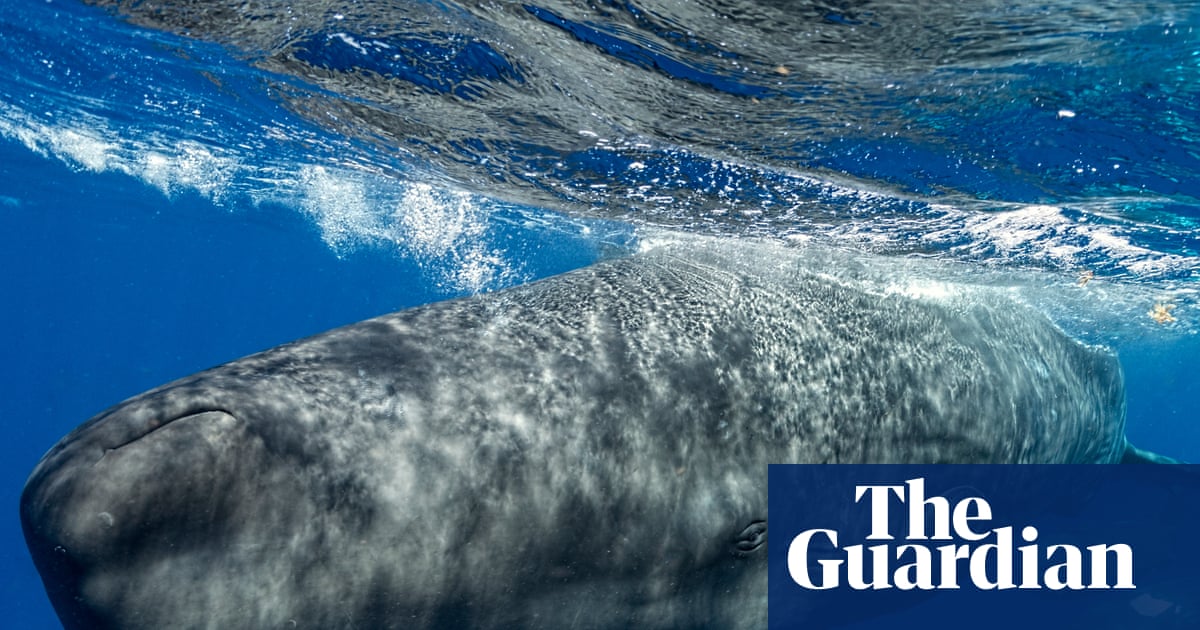
Researchers from Project Ceti, a non-profit research organisation, have discovered that sperm whales change their ‘vowel’ sounds when boats are nearby. The team spent four years studying the calls of 15 sperm whales off the coast of Dominica and found specific differences in their ‘codas’, or patterns of clicks, when they encountered shipping. These changes were so distinct that the scientists can now use them to predict when ships are nearby.
The study, published in the journal Ecological Informatics, found that individual click sequences became shorter and one type of coda became more prominent than another when the whales encountered shipping noise. The researchers also identified differences in the prevalence of two ‘vowel-like’ sounds, with the whales using one sound more frequently in noisy conditions.
According to David Gruber, the founder and chief executive of Project Ceti, the research raises questions about whether the whales are talking about the ships or if the noise is affecting their voices. Gruber also noted that if the team can discern what the whales are saying about the ships, it could impact policy and laws.
The researchers used audio tags attached to the whales by drones to record over 1,000 codas from the 15-strong sperm whale pod. They verified the presence of shipping noise using digital geolocation data and found that the whales prioritised altering the speed and types of codas they produced, rather than increasing the volume of their vocalisations.
The study builds on previous research by Project Ceti, which described the ‘use of vowels’ in sperm whales. The team found that the gaps between individual clicks in a coda sequence formed a continuous unit of sound that resembled two human vowels when condensed. The latest research suggests that these ‘vowels’ may carry meaningful information and that the whales change the way they use them in response to shipping noise.
While some researchers have criticised Project Ceti’s methods and terminology, Nathan Merchant, an underwater noise specialist, said that the study adds a new dimension of nuance to the story of how underwater noise affects cetaceans. However, he noted that more research is needed to determine what the changes in whale vocalisations mean.
The study’s findings have implications for our understanding of how marine animals respond to noise pollution and how we can mitigate its effects. As Merchant said, ‘Are they just struggling to say the same thing, or are they saying something different in the presence of this noise? It’s a really intriguing question.’