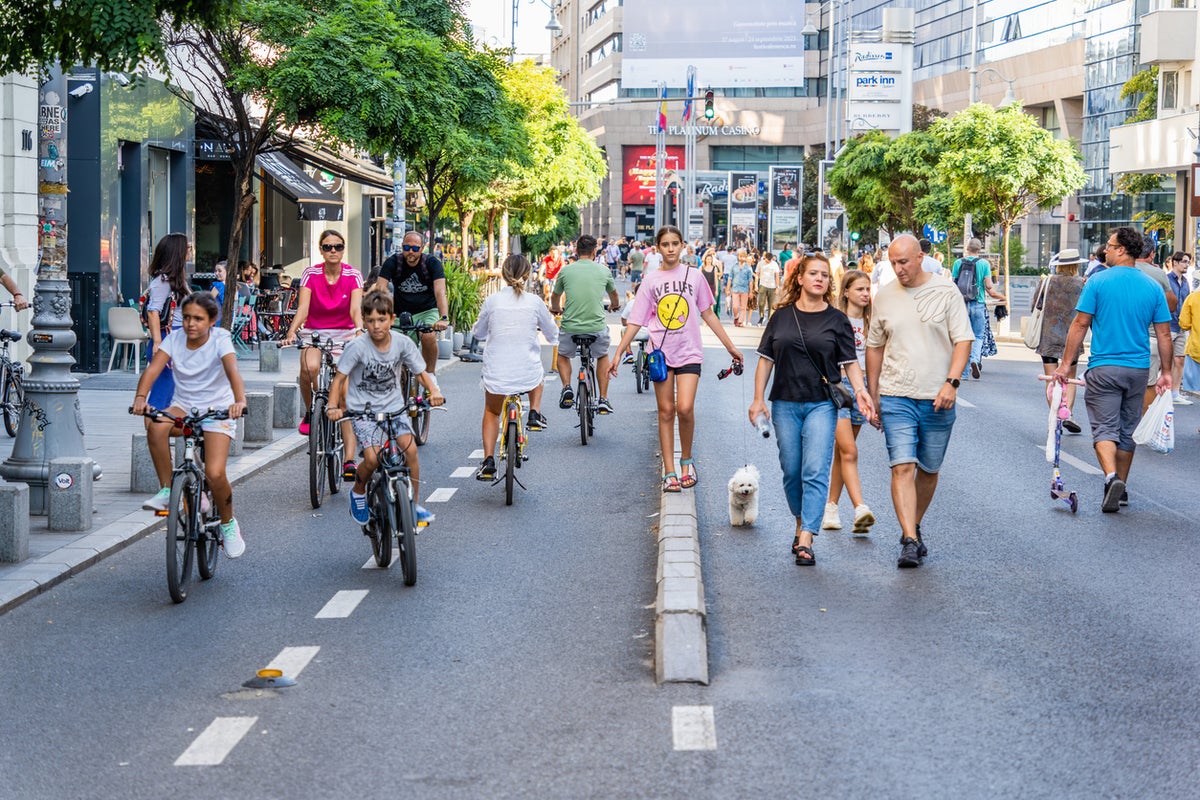
Cities around the world have been experimenting with car-free days and temporarily pedestrianizing streets, a trend that is becoming increasingly popular in North America. This summer, cities hosting the FIFA World Cup created pedestrianized fan zones for spectators and visitors. In Vancouver, a large stretch of Granville St. in the downtown core was pedestrianized, and the city has announced that it will remain car-free until at least September.
The concept of pedestrianized streets is not new, with precedents dating back to Europe over seven decades ago. The success of streets like Lijnbaan in Rotterdam and Strøget in Copenhagen has put concerns from business owners and drivers to rest, often exceeding expectations. These streets have proven to be major draws for pedestrians and cyclists, yielding increased economic activity without the need to devote public spaces to private vehicles.
While critics often worry that pedestrianization simply shifts traffic elsewhere, many cities have found that some trips disappear altogether as people switch routes, travel modes, or destinations. Pedestrianized streets are often evaluated economically, but their health benefits receive far less attention. A recent study at Carleton University measured air and noise pollution along Ottawa’s Queen Elizabeth Driveway, with and without the presence of vehicles, revealing that air pollution was typically about 70% higher when cars are present, while perceptible noise was about 50% higher.
The impact of pollution and noise is particularly acute for stationary road users, such as diners at patios, who cannot easily move out of harm’s way. The health and safety benefits of pedestrianized streets extend well beyond air pollution and noise, virtually eliminating collisions with people. In 2023, one-quarter of the 1.2 million global road traffic deaths were pedestrians and cyclists who died after being hit by drivers.
Ensuring that cities have ample, pleasant, and safe spaces for walking and cycling would be a critical step forward for public health. As cities rethink their approach to urban planning, pedestrianized streets can benefit people, businesses, and the planet. Uncertainty should not be feared, and it’s time to prioritize the needs of pedestrians and cyclists over those of private vehicles.
The future of pedestrianization is not without its challenges, but the benefits far outweigh the drawbacks. With the rise of electric vehicles, some may think that noise pollution will be alleviated, but EV noise can approach the level of gas-powered vehicles, and their heavier weight results in greater tire-related particulate emissions. Nevertheless, the advantages of pedestrianized streets make them an attractive solution for cities looking to create more livable and sustainable spaces.