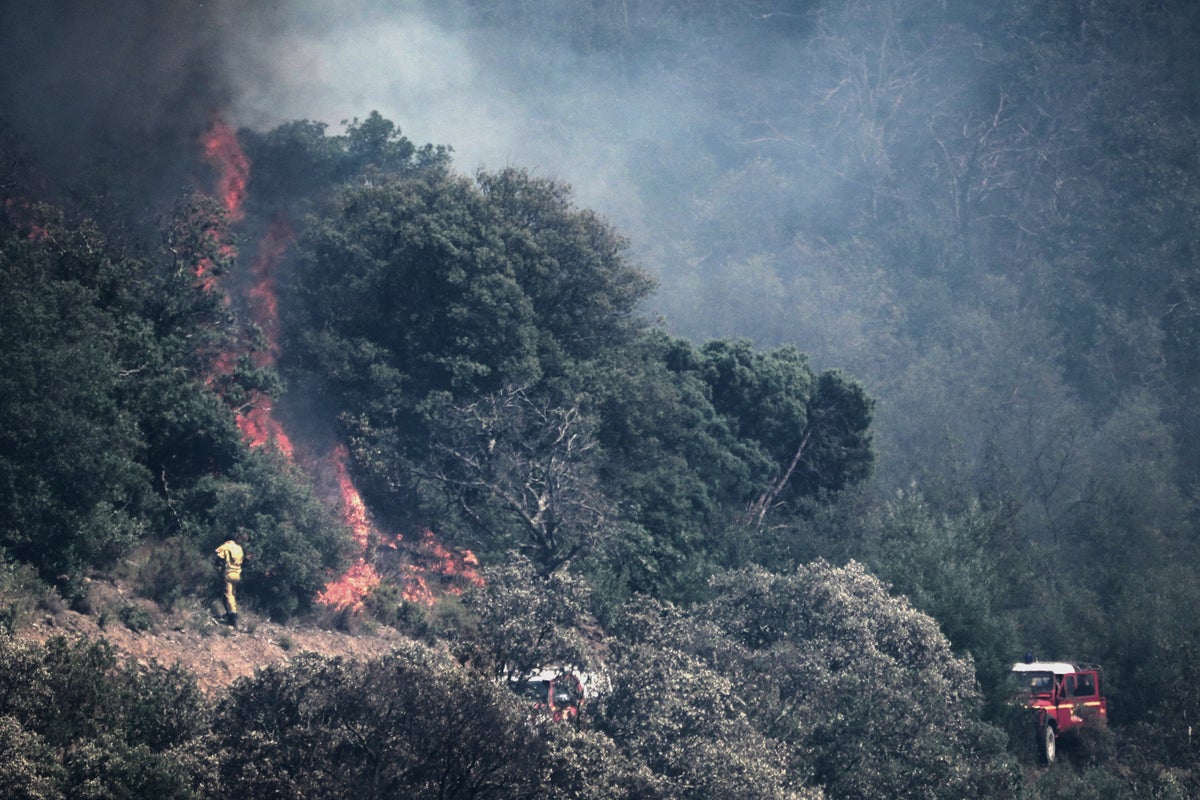
A major fire in the historic Fontainebleau forest south of Paris has triggered evacuations of some residential neighborhoods, disrupted train services, and halted highway traffic. The fire, which is unusual for its proximity to the French capital, is about 70 kilometers (42 miles) from Paris and has raised concerns for the safety of residents and visitors alike.
The region hosts the Fontainebleau Chateau, a popular tourist destination favored by Napoleon, and is a favorite among visitors from Paris and beyond. To combat the fire, two water-dumping planes were deployed over the area, along with hundreds of firefighters. Regional fire service spokesperson Paul Laurain confirmed the deployment to public broadcaster France-Info.
The fire has caused disruptions to train services, with trains to and from the bustling Gare de Lyon train station suspended late Sunday, although services were returning to normal by Monday morning. A section of the busy A6 highway leading southeast of Paris was also shut down due to fire risk.
The fire in Fontainebleau is just one of several wildfires in western Europe, which is experiencing its third red-alert heat wave this year. France is in the midst of its third heat wave of the summer, with temperatures surpassing 40 degrees Celsius (104 degrees Fahrenheit) across western and central areas and around 37 C (98 F) in Paris. Large fires in southern France have already scorched thousands of hectares (acres) since last week, disrupting the Tour de France cycling race and stretching firefighting resources.
The situation in France is mirrored in other parts of western Europe, including Spain, where a deadly wildfire has killed 13 people and left 10 others unaccounted for. The blaze, which ripped through a remote southern expat community last week, has been contained, but the region is still experiencing extreme heat, which combined with wind and little rainfall is creating ideal conditions for small wildfires to grow unchecked.