A fake federal agency in Nigeria, the Presidential Foreign Intervention Promotion Council (PFIPC), has sparked a political storm in the country ahead of a general election in January. The fictitious entity was allocated 1.3 billion naira (approximately £700,000) in Nigeria’s 2026 budget, raising questions about corruption and accountability within the government.
The scandal came to light in October when Femi Gbajabiamila, the president’s chief of staff, wrote to the police alleging that his signature, along with official seals and reference numbers, had been forged by Adeniyi Adeyemi Matthew, who claimed to have been appointed by the presidency to head the PFIPC. Adeyemi has also been accused of meeting ambassadors without the knowledge of the foreign affairs ministry and misleading the country’s accountant-general’s office into opening accounts for the PFIPC.
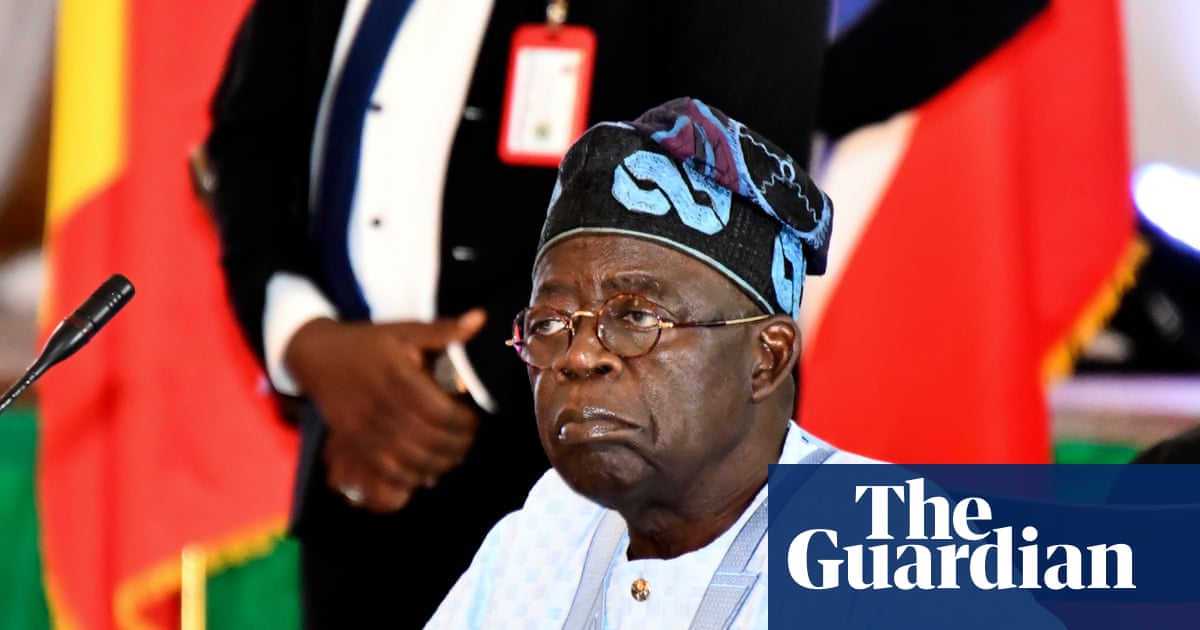
The case is set to be heard in court on July 27, and President Bola Ahmed Tinubu has directed the Independent Corrupt Practices and Other Related Offences Commission (ICPC) to open a probe. The House of Representatives has also set up a committee to question Abubakar Atiku Bagudu, the minister of budget and economic planning.
Critics of the Tinubu administration have pointed to the controversial record of key government officials mentioned in the scandal, including Gbajabiamila, who was handed a three-year suspension from practicing law in Atlanta in 2007 for failing to pass on $25,000 awarded as an injury settlement to a client. Bagudu, the minister of budget and economic planning, spent six months in a federal prison in Houston in 2003 for being an alleged accomplice to former dictator Sani Abacha.
The latest scandal has piled pressure on Tinubu ahead of January’s election, thrusting endemic corruption in Africa’s largest economy back into the spotlight. Former vice-president Atiku Abubakar, who is due to challenge Tinubu’s re-election bid, has called for an independent commission of inquiry to establish exactly who was involved with the scheme.
The scandal has also raised questions about how Adeyemi was able to gain access to the federal secretariat in Abuja, with some critics speculating collusion with officials at the highest echelons of government. The presidency has defended Gbajabiamila, stating that politicians and members of the public should not swallow Adeyemi’s narrative hook, line, and sinker.
The incident has sparked widespread outrage, with many calling for greater transparency and accountability within the government. As the country prepares for the upcoming election, the scandal is likely to remain a major issue, with many Nigerians demanding answers about the extent of corruption within the government.