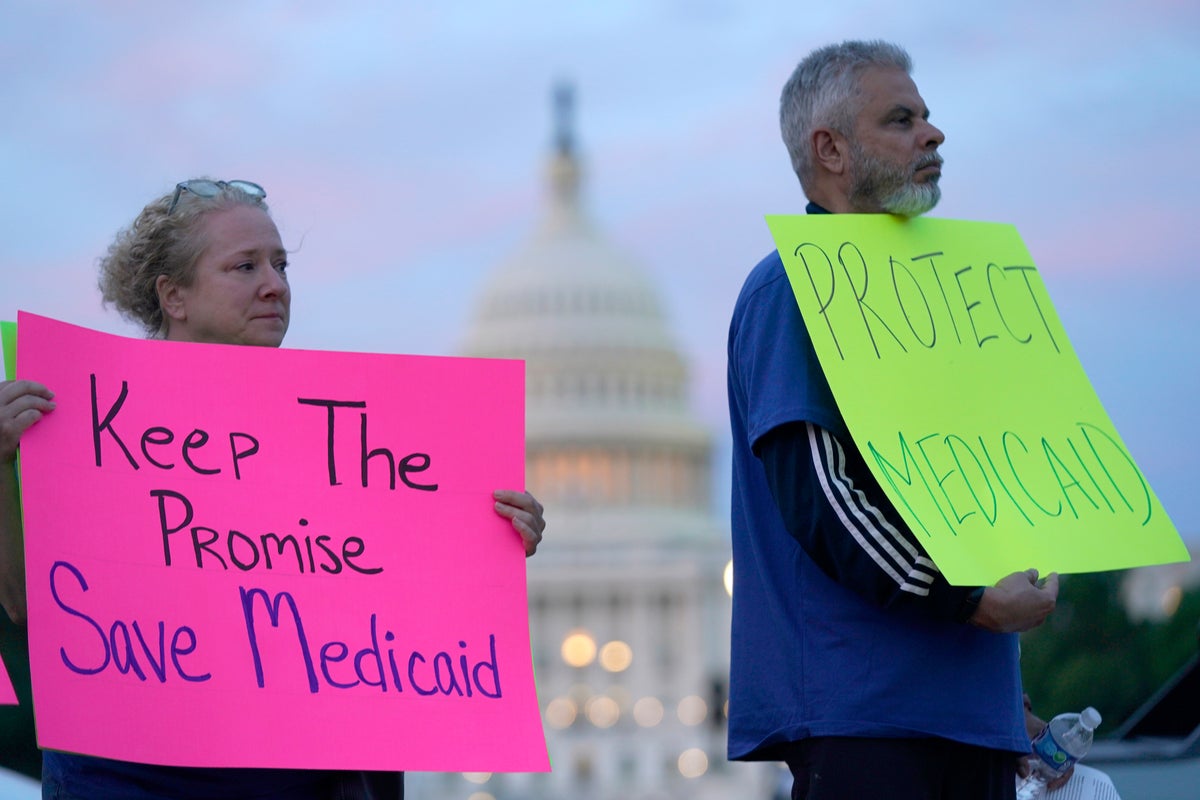
In January 2025, new Medicaid work mandates will take effect nationwide under President Trump’s 2025 tax and policy package, with several Republican‑governed states adopting rules that are stricter than those required by the federal government. The federal guidelines allow states to accept a participant’s self‑attestation for the first 12 months of enrollment, but at least six states—including Arkansas, Idaho, Indiana, New Hampshire, North Carolina and Ohio—are insisting on immediate medical proof, a standard that more states are beginning to adopt.
Health advocates warn that these tighter demands could leave low‑income individuals without coverage. “Someone may not be able to work, but they can’t see a doctor because they can’t afford it,” said Jennifer Tolbert, director of state health policy and data at KFF. “But Medicaid is saying you need documentation from a provider.” The federal rule also requires that medically frail people have conditions that “significantly impair” their ability to work, volunteer or attend school.
The push for documentary evidence is backed by the conservative Foundation for Government Accountability, which argues that self‑attestation is “fraud‑by‑design.” Jonathan Ingram, vice president of research and policy for the foundation, has urged states not to rely on beneficiaries’ word. Missouri Rep. Darin Chappell, who worked with the foundation, introduced a constitutional amendment that would have eliminated self‑attestation entirely; the amendment passed the House but stalled in the Senate.
The new law applies to up to 20 million lower‑income adults without children in 40 states and the District of Columbia, requiring 80 work or volunteer hours per month or half‑time schooling, with exceptions for medical frailty. States will now need to verify eligibility twice a year, and after 2028 self‑attestation will be allowed only once per enrollment. Verification will rely increasingly on third‑party data such as workers’ compensation claims and prescription records, with additional documentation required for conditions not captured in those databases.
The changes have already strained state systems. Arizona, for example, saw a 55 % drop in enrollment from April 2025 to April 2026, the largest decline nationwide, as call volumes and verification demands surged. Patient advocates argue the added paperwork risks denying coverage to those who qualify, with lawyers and policy directors noting that diagnosis codes do not always reflect the severity of a condition.