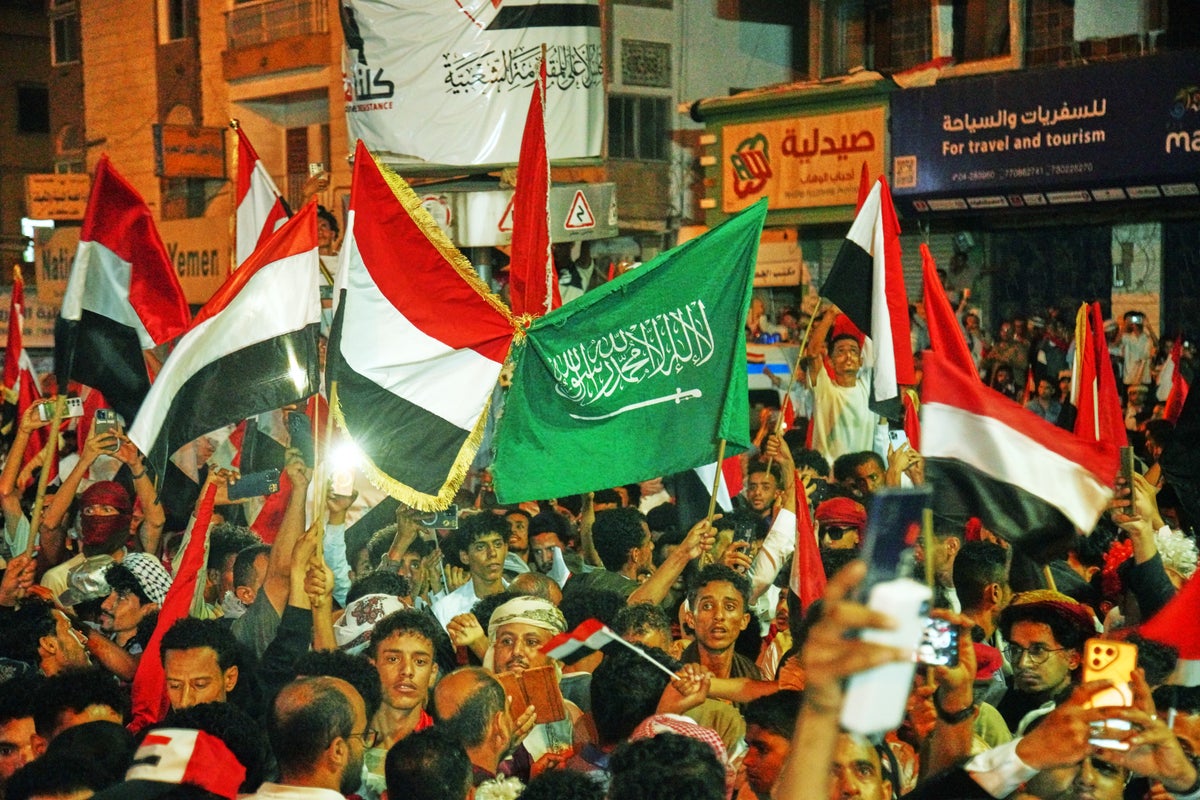
Saudi Arabia announced that it had intercepted a ballistic missile fired by Iran‑backed Houthi rebels in Yemen. Military spokesperson Major‑General Turki al‑Malki said the missile was launched toward the southwestern city of Khamis Mushait and was destroyed before reaching its target. The Associated Press could not independently verify the claim, and no immediate statement of responsibility has been issued, although the Houthis sometimes take days to respond.
The Gulf Cooperation Council, a regional body representing Arab Gulf states, condemned the latest Houthi attack as a “grave escalation and threat to regional security.” The council urged the international community to respond to the growing threat posed by the rebels’ missile campaign.
In Tehran‑related news, semi‑official Iranian outlets reported that President Masoud Pezeshkian had returned to the capital from New York after a busy week at the United Nations General Assembly. During the assembly, Pezeshkian delivered a speech that countered President Donald Trump’s threat to “annihilate” Iran, yet he concluded that Tehran remained open to diplomacy. Iranian foreign minister Abbas Araghchi announced that the government had proposed, through mediators, a plan to reopen the Strait of Hormuz and resume nuclear negotiations within seven days, contingent on the United States lifting its naval blockade, waiving oil sanctions, and observing a ceasefire that would include Lebanon.
Meanwhile, Israeli settlers in the occupied West Bank have intensified efforts to seize natural springs and heritage sites, actions that affect the 2.8 million Palestinians living there. In the Jordan Valley, settlers severed a water pipe that supplied a Palestinian village, redirecting the flow to a pool they renamed after Herod. Human‑rights groups argue the move is part of a broader strategy to claim heritage sites and limit Palestinian access to vital water resources.