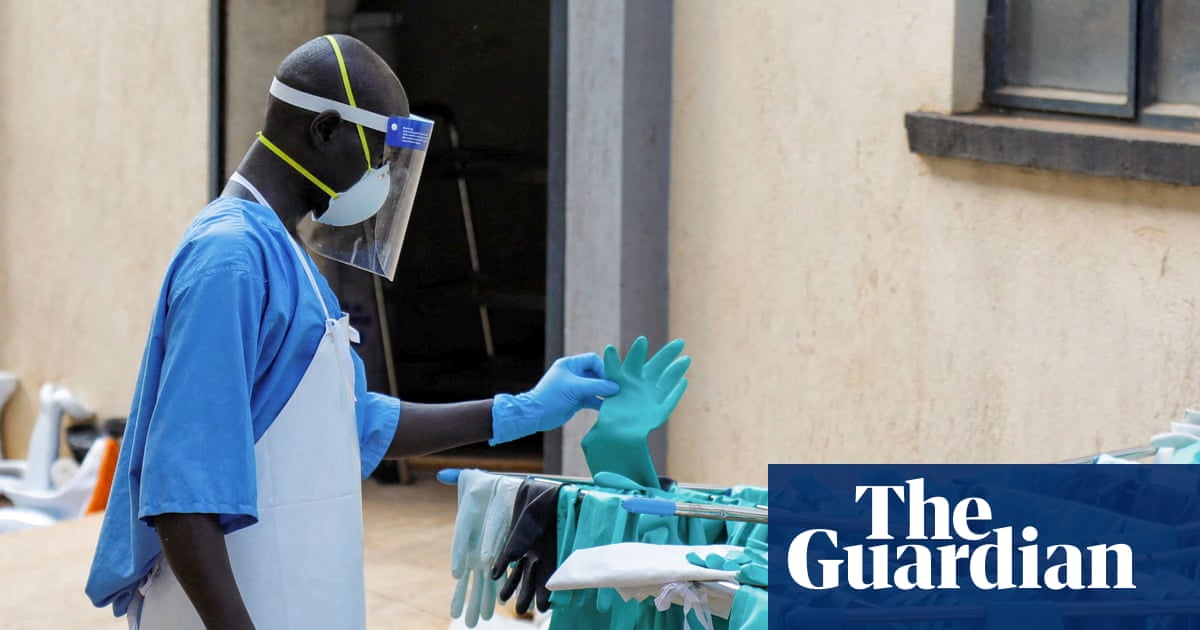
Uganda has begun lobbying countries to lift Ebola-related travel restrictions after discharging its last confirmed Ebola patient from hospital. The discharge of a Congolese national from the Mulago national referral hospital’s isolation centre in Kampala triggered the start of a 42-day countdown required by the World Health Organization before Uganda can officially be declared Ebola-free, provided no new infections are detected. The outbreak in the country infected 20 people and claimed two lives.
Fifteen countries continue to maintain either partial or full travel restrictions on Uganda after the outbreak, measures the government said have crippled tourism, trade and business, despite the country’s relatively successful response. The US has placed Uganda on a level four advisory against all travel due to the Ebola outbreak. Uganda’s health minister, Dr Chris Baryomunsi, said the country was not yet Ebola-free – under WHO guidelines, countries must complete two consecutive 21-day incubation periods without recording a new case before an outbreak can officially be declared over.
Baryomunsi also noted that the country remains on high alert because the outbreak in the Democratic Republic of the Congo continues to spread. The DRC reported on Thursday that the number of confirmed cases in the country had risen to 2,073, including 796 deaths. The outbreak, caused by the Bundibugyo strain of the virus, was first declared by the WHO on 17 May.
Uganda’s outbreak has been markedly different from previous Ebola emergencies in the region, with only two deaths and 20 confirmed infections including 15 Congolese nationals, four health workers and one driver. WHO’s representative in Uganda, Dr Kasonde Mwinga, said the country’s response demonstrated the value of sustained investment in epidemic preparedness. The case fatality rate of less than 10% is among the lowest recorded in Ebola outbreaks because the lowest has always been 30%.
That is not by luck. It is because people invested in preparedness. The outbreak also accelerated scientific efforts to develop vaccines against the Bundibugyo strain of Ebola, for which no licensed vaccine exists.
Dr Ronnie Bahatungire, the clinical services commissioner at Uganda’s health ministry, said the country had already participated in trials involving experimental therapies during the outbreak and plans to join vaccine studies. This week, Oxford University’s Oxford Vaccine Group launched the world’s first Phase I clinical trial of BD-Ebov, a vaccine candidate targeting the Bundibugyo strain, in response to the outbreak, with the first patient already enrolled. Despite Uganda’s progress, authorities said the threat remains across the border.
Baryomunsi said presidents Yoweri Museveni of Uganda and Félix Tshisekedi of DRC had agreed on closer cross-border cooperation and signed a bilateral memorandum of understanding.